

How to Match Heavy Hex Bolt and Nut Correctly for Structural Steel Connections
1. Introduction
In the high-stakes realm of industrial construction, a structural steel connection is only as reliable as the fastener assembly holding it together. While project engineers meticulously specify high-strength bolts to carry immense shear and tension loads, these bolts cannot function independently. They must be precisely paired with compatible nuts and washers to create a secure, code-compliant structural joint.
Learning how to match a heavy hex bolt and nut is not simply a matter of finding two pieces with the same diameter. Correct bolt-and-nut matching is critical for maximizing structural performance, ensuring installation reliability, meeting stringent building codes, and ultimately guaranteeing project safety. An incorrect match can lead to stripped threads during torqueing, accelerated corrosion, failed joint inspections, and catastrophic structural failure.
This comprehensive engineering guide is designed for buyers, contractors, project engineers, and fastener distributors. We will walk you through the essential principles of heavy hex bolt nut matching, including bolt and nut grade compatibility, washer requirements, coating limitations, thread fit considerations, and how to rigorously verify specifications before finalizing your procurement.
2. What Are Heavy Hex Bolts and Nuts?
Before exploring compatibility, it is crucial to understand the distinct geometry of heavy hex fasteners. Unlike standard hex bolts and nuts used in general hardware applications, heavy hex fasteners are explicitly engineered for heavy-duty load bearing.
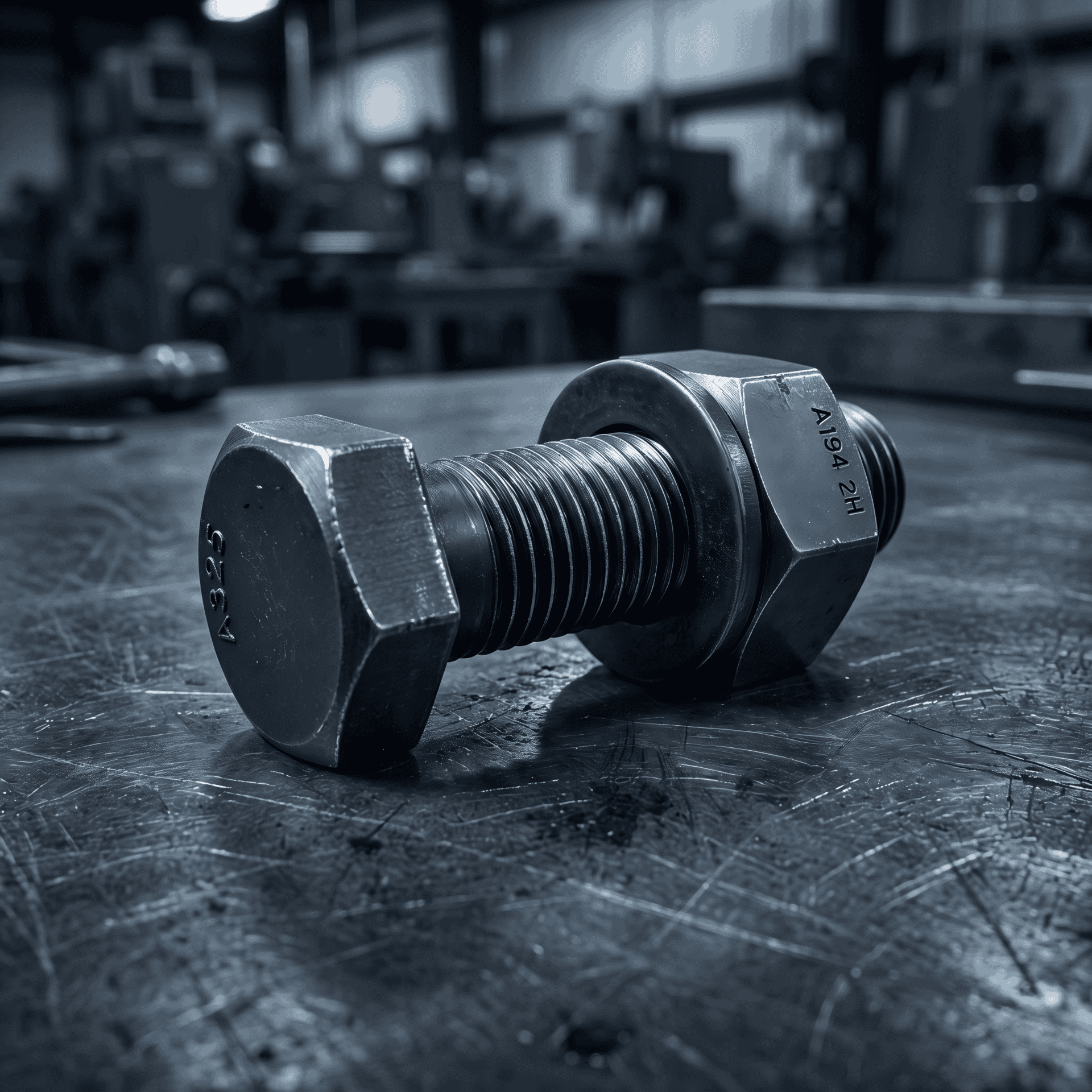
Heavy hex bolts feature a head that is approximately 1/8 inch wider across the flats than a standard hex bolt of the same diameter. Furthermore, the head is noticeably thicker. Heavy hex nuts share this oversized geometry, offering a broader width and greater thickness. This expanded footprint provides a significantly larger bearing surface area, which helps safely distribute extreme clamping forces over the connected steel members without crushing the metal or pulling through oversized holes.
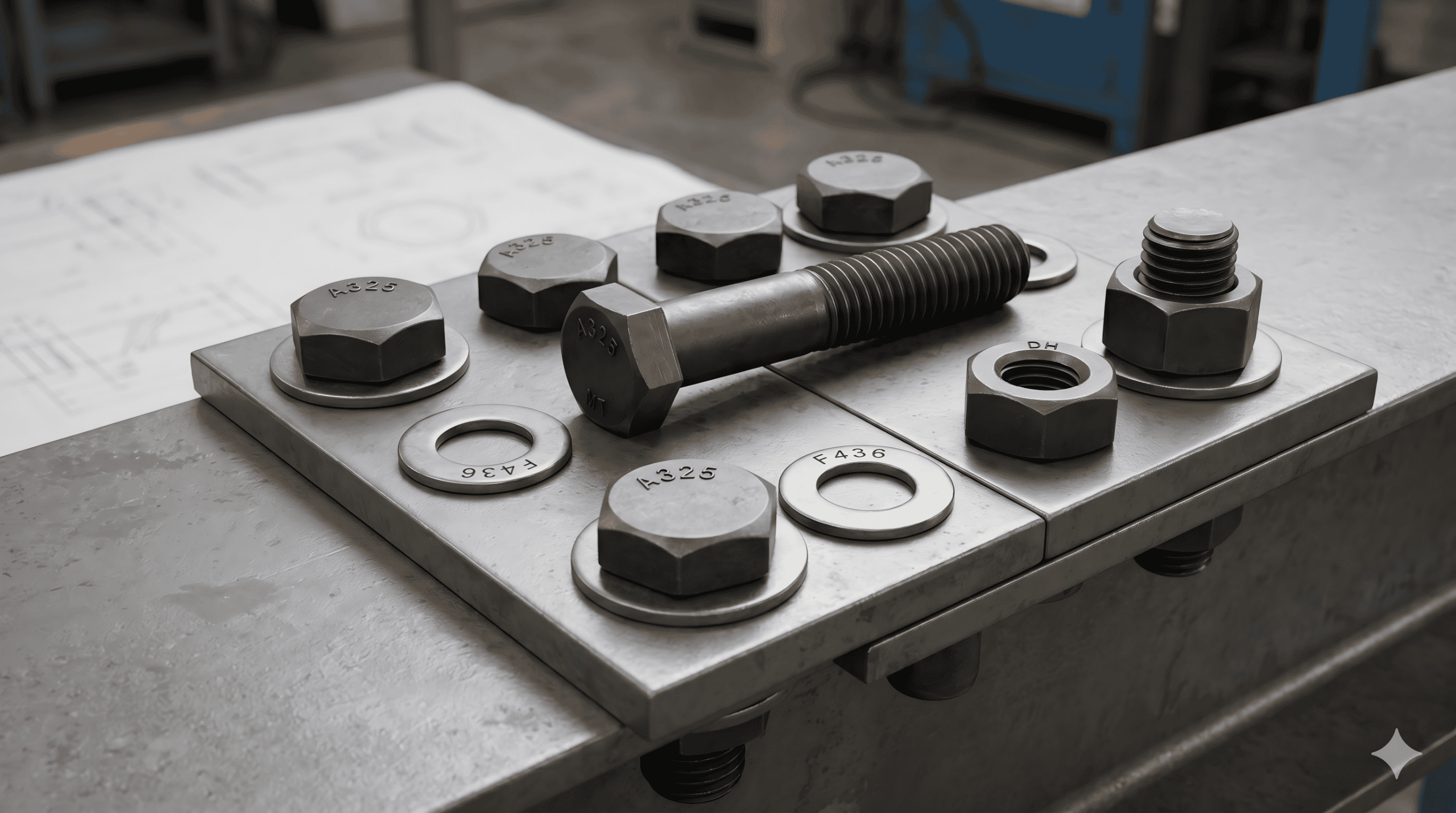
Because of this robust design, heavy hex bolts and nuts are the undisputed standard in structural steel connections. You will find them holding together commercial skyscrapers, long-span bridges, electrical transmission towers, and major industrial plants. Crucially, they are rarely used in isolation; they are deployed as a complete structural bolting assembly comprising the bolt, the nut, and hardened steel washers.
3. Why Correct Matching Matters in Structural Steel Connections
A common misconception in fastener procurement is assuming that any heavy hex nut will work with any heavy hex bolt, provided they share the same diameter and thread pitch. This assumption is dangerous.
Bolt and nut matching is fundamentally an engineering compatibility issue. The core objective of a structural bolt is to generate and maintain a specific clamp force (pretension) holding the steel plies together. The nut must be mechanically strong enough to withstand the bolt's tensioning process without its internal threads shearing off (stripping). If a lower-grade nut is paired with a high-strength bolt, the nut will fail during installation long before the bolt reaches its required tension.
Proper matching directly affects load transfer, installation performance, and compliance with strict structural fastening standards established by bodies like the American Institute of Steel Construction (AISC) and the Research Council on Structural Connections (RCSC). Furthermore, mismatched components can cause severe coating problems—such as galvanic corrosion or thread seizing—and will result in immediate rejection by third-party site inspectors, causing expensive project delays.
4. How to Match Heavy Hex Bolt and Nut Correctly
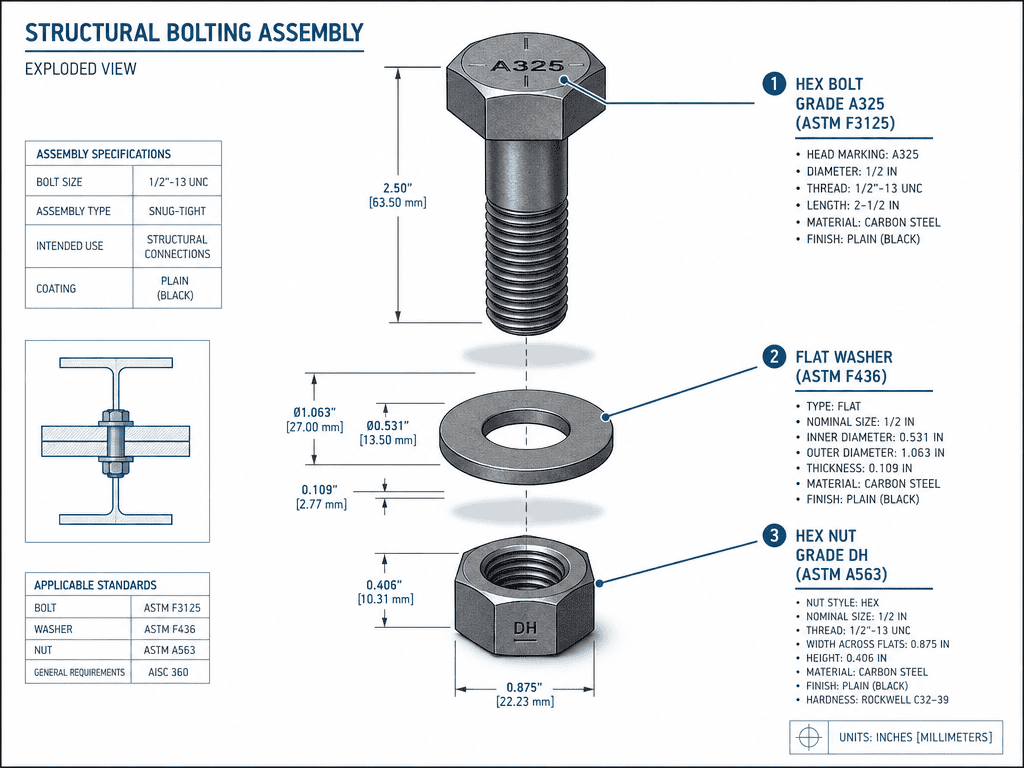
To successfully navigate heavy hex bolt nut matching, buyers and engineers must evaluate several intersecting specifications. The table below outlines the correct matching principles for the most common structural bolt grades utilized in North America under the ASTM F3125 umbrella.
| Bolt Specification / Grade | Matching Heavy Hex Nut Grade | Required Hardened Washer | Typical Finish / Coating |
|---|---|---|---|
| ASTM F3125 Grade A325 (Type 1) | ASTM A563 Grade C, C3, D, DH or ASTM A194 Grade 2H | ASTM F436 Type 1 | Plain, Zinc Plated, Hot-Dip Galvanized |
| ASTM F3125 Grade A490 (Type 1) | ASTM A563 Grade DH or ASTM A194 Grade 2H | ASTM F436 Type 1 | Plain, Zinc/Aluminum Flake (No HDG) |
| ASTM F3125 Grade A325 (Type 3) Weathering Steel | ASTM A563 Grade C3, DH3 | ASTM F436 Type 3 | Plain (Weathers naturally) |
| ASTM F3125 Grade A490 (Type 3) Weathering Steel | ASTM A563 Grade DH3 | ASTM F436 Type 3 | Plain (Weathers naturally) |
Note: Thread compatibility is also paramount. Structural bolts in the US typically use Unified National Coarse (UNC) threads with a Class 2A (bolt) and Class 2B (nut) fit.
5. Bolt Grade and Mechanical Performance Matching
The golden rule of fastener engineering is that bolt strength must be matched with an appropriate nut grade. The nut's "proof load"—the maximum axial load it can withstand without thread deformation—must equal or exceed the minimum tensile strength of the bolt.
Let’s look at practical structural bolt grades. An ASTM F3125 Grade A325 bolt has a minimum tensile strength of 120 ksi. Therefore, it requires a nut like ASTM A563 Grade C or Grade DH, which possess proof loads exceeding that limit. Conversely, an ASTM F3125 Grade A490 bolt is significantly stronger, with a minimum tensile strength of 150 ksi. You cannot use a standard Grade C nut on an A490 bolt; it will strip. The A490 bolt strictly requires an ultra-high-strength ASTM A563 Grade DH or ASTM A194 Grade 2H nut.
It is important to clarify that higher-strength bolts do not automatically mean any high-strength nut is acceptable. The assembly must strictly follow the relevant specification matrix to ensure the threads interact properly under immense torque and tension. Buyers and engineers must verify the full bolting system, not just the individual component's strength.
6. Material and Coating Compatibility
Material and finish selection is arguably where the most costly mistakes are made in heavy hex bolt and nut matching. The coating applied to the bolt dictates the coating and thread fit of the matching nut.
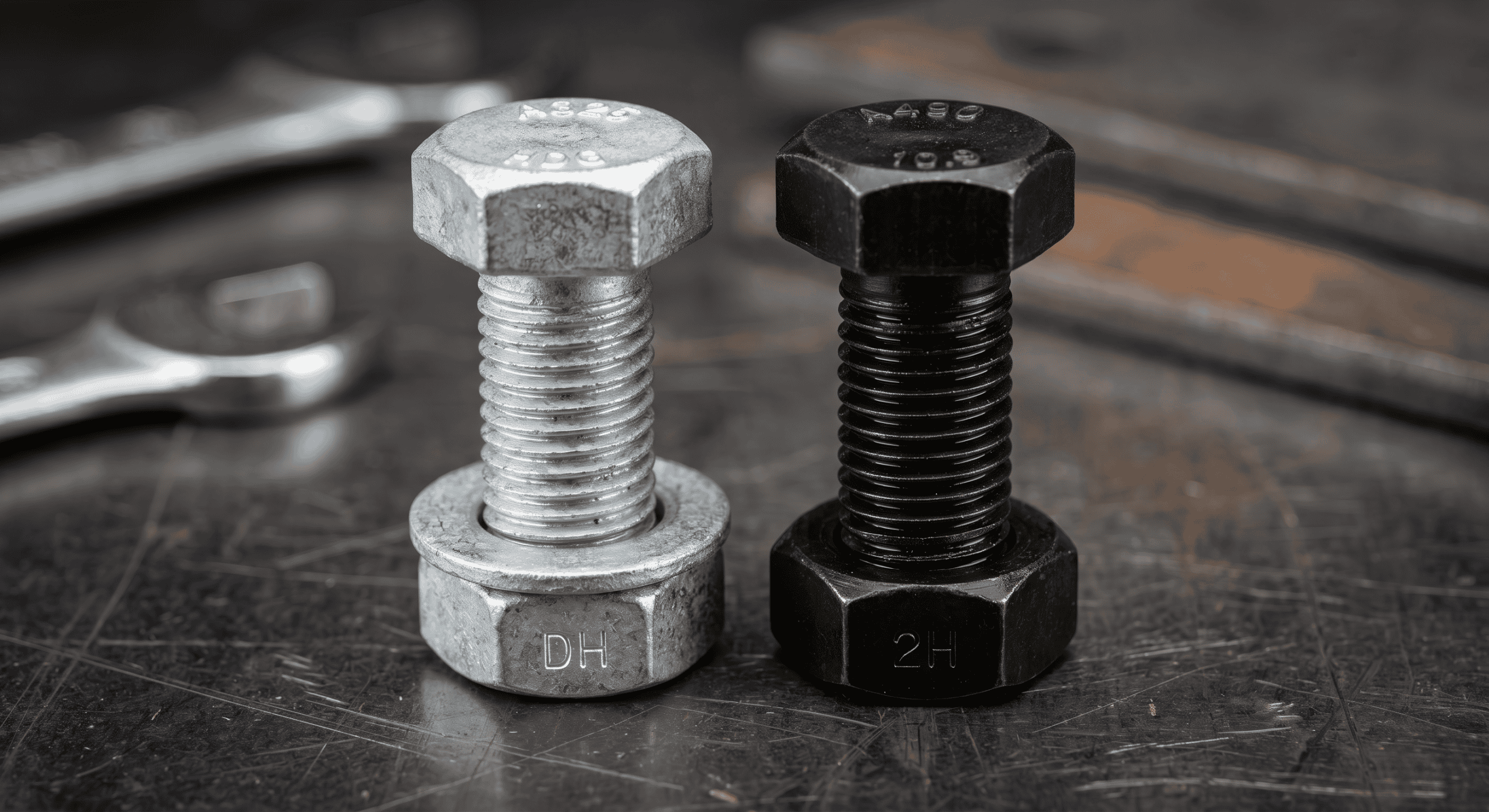
Galvanized vs. Non-Galvanized Assemblies: When an A325 heavy hex bolt is Hot-Dip Galvanized (HDG) for outdoor corrosion protection, a thick layer of zinc is added to the threads. If you attempt to thread a standard, plainly tapped heavy hex nut onto an HDG bolt, it will bind and seize. Therefore, HDG bolts require HDG nuts that have been overtapped (tapped oversize after galvanizing) to accommodate the extra zinc thickness on the bolt threads. To maintain thread strength despite the overtapping, ASTM standards usually mandate that galvanized assemblies use the stronger Grade DH nut, which is then heavily lubricated.
Coating Restrictions for A490 Bolts: You must exercise extreme caution with ultra-high-strength bolts. ASTM F3125 Grade A490 bolts are strictly prohibited from being hot-dip galvanized or electroplated due to the risk of hydrogen embrittlement—a phenomenon that causes sudden, catastrophic cracking. If corrosion protection is required for A490 assemblies, specific zinc-aluminum flake coatings must be used, and the nuts and washers must be coated compatibly.
7. Nuts and Washer Compatibility
Heavy hex structural bolts are engineered to operate as a system, meaning they are typically used with compatible heavy hex nuts and hardened washers. Washers are not merely optional accessories to make the joint look tidy; they are integral to the structural steel connection's mechanical function.
Standard flat washers (like USS or SAE) will instantly crush under the extreme clamping pressure of a structural bolt. You must match the assembly with ASTM F436 hardened steel washers. These washers prevent the bolt head and nut from galling (damaging) the softer structural steel during the torqueing process, and they ensure accurate, consistent torque-to-tension relationships.
Furthermore, the washer type must match the bolt's material. If you are using Type 3 weathering steel bolts and nuts, you must use Type 3 weathering steel F436 washers. Buyers must verify complete assembly compatibility down to the washer to satisfy site inspectors.
8. Applications: How Matching Requirements Vary by Project
How you approach heavy hex bolt nut matching will vary significantly based on the project environment and the engineer's design intent.
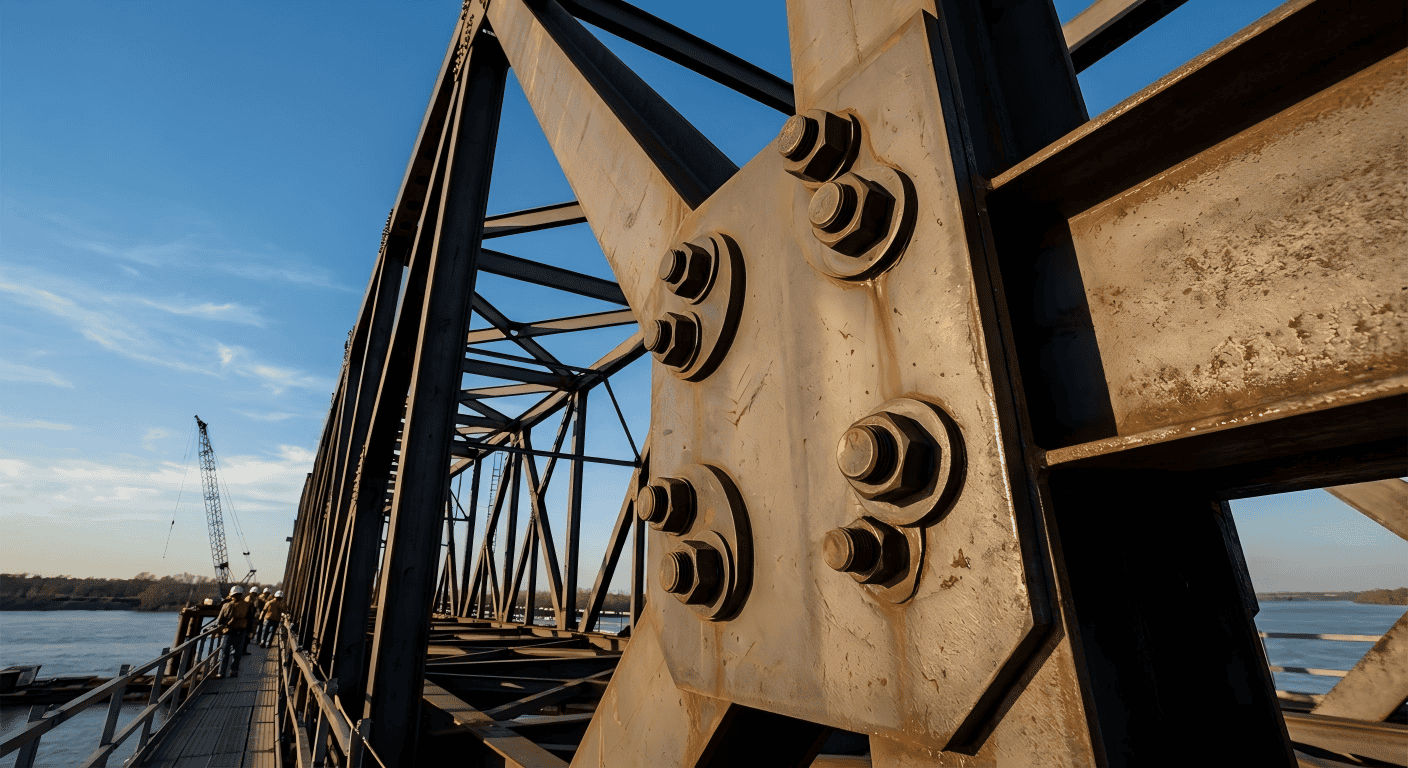
- Bridges and Highway Infrastructure: These structures endure severe dynamic loads, vibration, and weather exposure. If designed with weathering steel (Corten), the bolts, nuts, and washers must universally be "Type 3" grades to ensure the entire joint develops a protective rust patina evenly without galvanic corrosion.
- High-Rise Buildings: Indoor structural framing protected from the elements typically utilizes plain finish A325 or A490 bolt assemblies. Focus is heavily placed on strict grade matching and proper tension-control installation methods rather than advanced corrosion coatings.
- Electrical Transmission Towers: These outdoor structures demand decades of rust prevention without maintenance. Consequently, heavy hex bolt assemblies are almost exclusively Hot-Dip Galvanized, requiring careful attention to overtapped nuts and factory lubrication requirements.
Engineers select the appropriate assembly based on load requirements, environmental conditions, project drawings, and code compliance. Procurement teams must simply ensure that the exact, fully matched system specified on the bill of materials is sourced without unauthorized substitutions.
9. Common Matching Mistakes Buyers Should Avoid
Even seasoned procurement professionals can trip up when ordering structural fastening assemblies. Avoid these common pitfalls to ensure project success:
- Choosing a nut based only on diameter: Assuming any 1-inch heavy hex nut will fit a 1-inch structural bolt ignores thread pitch, strength grades, and coating allowances.
- Ignoring grade compatibility: Attempting to use a standard Grade A nut on an A325 structural bolt will result in thread failure during tightening.
- Mixing galvanized and plain components: Forcing a standard plain-tapped nut onto a hot-dip galvanized bolt will cause the threads to jam and seize permanently.
- Overlooking washer requirements: Forgetting to order F436 hardened washers, or substituting them with standard flat washers, will lead to rejected joint inspections.
- Ordering without checking project specifications: Sourcing components that look right but deviate from the specific ASTM standards listed on the engineer's drawings is a major liability risk.
The practical consequence of these mistakes is severe: work stoppages on the construction site, rejected materials, safety hazards, and the costly process of re-ordering rush shipments.
10. Buying Guide for Heavy Hex Bolt and Nut Sets
To eliminate errors during the procurement phase, buyers should treat structural fasteners as comprehensive "sets" rather than isolated hardware items. Before sending an RFQ or placing an order, systematically confirm the following parameters:
- Bolt Grade & Type: (e.g., ASTM F3125 Grade A325 Type 1).
- Matching Nut Grade: (e.g., ASTM A563 Grade DH).
- Washer Requirements: (e.g., ASTM F436 Type 1 Hardened).
- Coating/Finish: Ensure the coating is uniform across the assembly and compliant with the bolt grade's restrictions.
- Diameter and Length: Double-check the grip length to ensure enough threads protrude past the nut upon installation.
- Thread Type: Verify UNC (Unified National Coarse) thread requirements.
- Certification and Test Reports: Always demand a Material Test Certificate (MTC) proving the chemical and mechanical compliance of the matched assembly.
Because structural integrity relies so heavily on these components, the importance of sourcing from a reliable, certified fastener manufacturer or distributor cannot be overstated.
How to Order / Quick Specs
QISHENG is an industry-leading professional supplier of high-strength heavy hex bolts, perfectly matched heavy hex nuts, and hardened structural washers. We specialize in supporting EPC contractors, industrial fastener distributors, and global project procurement teams with precision manufacturing, comprehensive technical documentation, and customized supply chain solutions.
Available Standards
ASTM F3125 (Grades A325 / A490)
ASTM A563 (Grades C, DH, DH3)
ASTM A194 Grade 2H
Customization
Precise thread sizing, specialty material grades, advanced anti-corrosion coatings (including HDG overtapping), custom head marking, and rugged export packaging.
Documentation (MTC)
Full Material Test Certificates (MTC/MTR), mechanical proof load and tensile reports, dimension inspections, and detailed commercial packing lists provided.
Export Support
Extensive experience with the North American structural market, seamless port documentation, and Third-Party Inspection (TPI) coordination.
Inquiry Details to Prepare
Bolt specification, matching nut grade, nominal size/length, coating type, required quantity, destination port, and necessary certifications.
Technical Support
Our structural fastening engineers are available before you order to assist with assembly matching if your project specifications are not yet fully finalized.
11. Conclusion
Matching a heavy hex bolt and nut correctly is a fundamental requirement of structural steel construction. It is an engineering discipline that demands rigorous attention to bolt grades, nut proof loads, thread fits, washer compatibility, and coating science. The strength of a high-grade structural bolt like an A325 or A490 is entirely neutralized if it is paired with an inadequate nut or an incompatible finish.
By understanding how to match heavy hex bolt and nut assemblies through the lens of ASTM specifications, buyers and engineers can prevent costly installation failures, ensure smooth site inspections, and maintain the overarching safety of the structures they build. Always review project drawings carefully, treat fasteners as complete engineered sets, and partner with a supplier that provides the necessary testing documentation to validate your selections.
12. FAQ
How do I match a heavy hex bolt with the correct nut?
You must select a nut grade whose "proof load" meets or exceeds the tensile strength of the bolt, following ASTM specifications. For example, an ASTM F3125 Grade A325 bolt is typically matched with an ASTM A563 Grade DH or ASTM A194 Grade 2H nut.
Can any heavy hex nut be used with a structural bolt?
No. Standard or lower-grade heavy hex nuts will strip under the extreme tension required for structural connections. You must use specific high-strength grades approved for structural bolting, and the nut must match the bolt's specific coating requirements.
Do galvanized heavy hex bolts require matching galvanized nuts?
Yes, and importantly, the galvanized nuts must be "overtapped" (tapped slightly oversize) to accommodate the added thickness of the zinc coating on the bolt threads. Otherwise, the nut will seize and will not thread onto the bolt.
Are washers required for heavy hex structural bolt assemblies?
Yes. Structural assemblies almost universally require ASTM F436 hardened steel washers to prevent the bolt head and nut from galling the softer structural steel, and to ensure consistent tensioning across the joint.
What happens if the nut grade does not match the bolt grade?
If the nut is too weak, its internal threads will shear and strip during the tightening process before the bolt achieves its designed clamp force, resulting in a failed, unsafe structural joint.
How can buyers verify compatibility before ordering?
Buyers should strictly reference the project's engineering drawings and the relevant ASTM fastening standards (such as ASTM F3125). Additionally, consulting with the technical team of a certified fastener manufacturer can confirm that the requested bolt, nut, washer, and coating combination is fully compatible and code-compliant.