

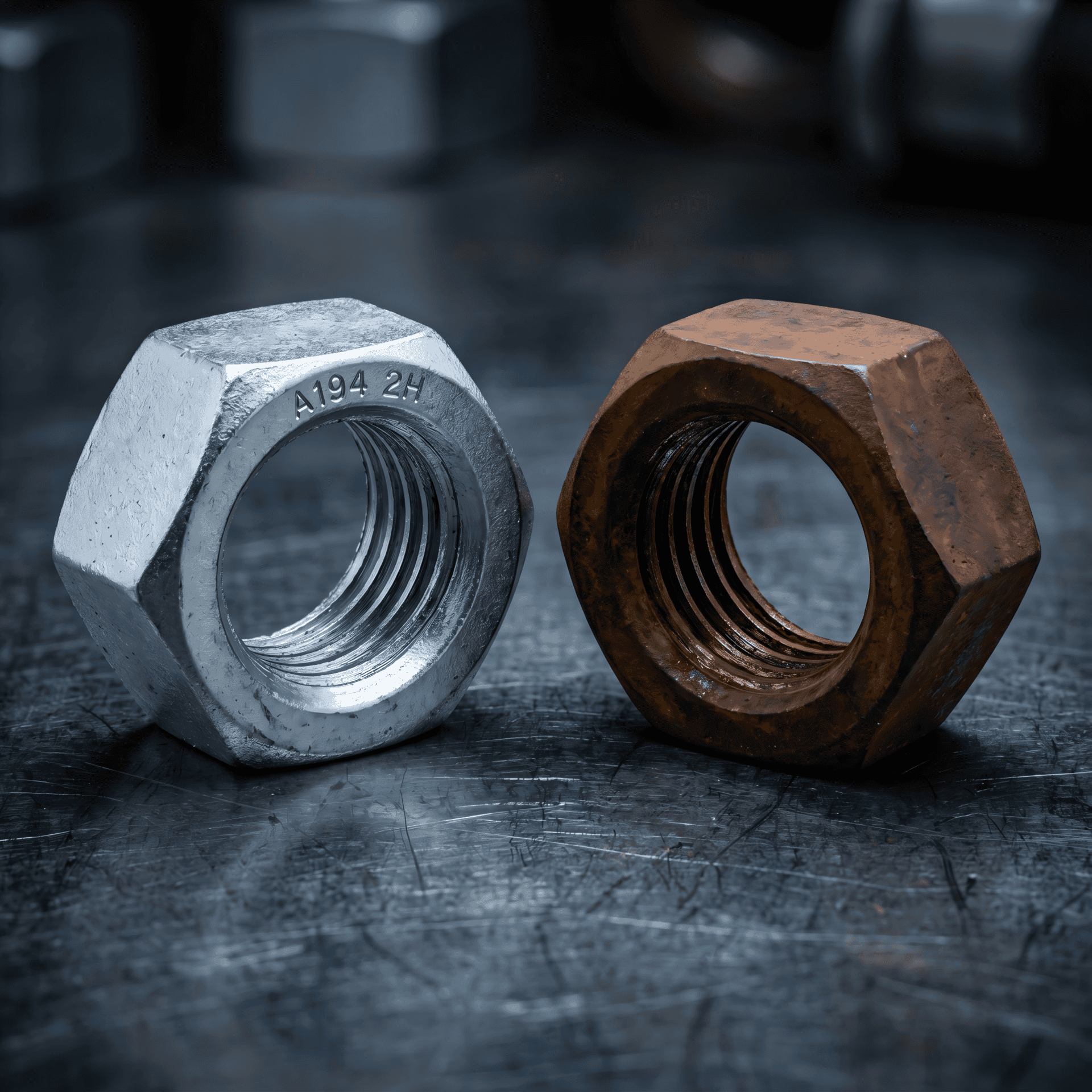
Heavy Hex Nut Grades Explained: ASTM A563, DH, and DH3 for Structural Bolting
1. Introduction
In the highly demanding field of structural engineering, a steel connection is only as reliable as the fasteners holding it together. While project engineers spend considerable time selecting the correct high-strength bolts, equal attention must be paid to the corresponding nuts. Heavy hex nuts are vital components in structural steel connections, ensuring that the bolt can reach its required tension without the threads stripping or the nut fracturing.
For buyers, contractors, and fastener distributors, navigating nut specifications can be challenging. The primary standard governing these critical components in North America is ASTM A563, which covers carbon and alloy steel nuts. Within this overarching specification, there are multiple grades, but two stand out specifically for high-strength structural bolting: Grade DH and Grade DH3.
This comprehensive technical guide will clarify the relationship between the ASTM A563 specification and its structural grades. You will learn the fundamental differences between DH and DH3, including their strength classifications, material composition, heat treatments, and specific environmental applications. Whether you are procuring materials for an offshore platform, a high-rise building, or a weathering steel bridge, understanding these heavy hex nut grades is essential for project safety and compliance.
2. What Are Heavy Hex Nuts?
Before diving into specific grades and standards, it is important to define what makes a nut a "heavy hex" nut.
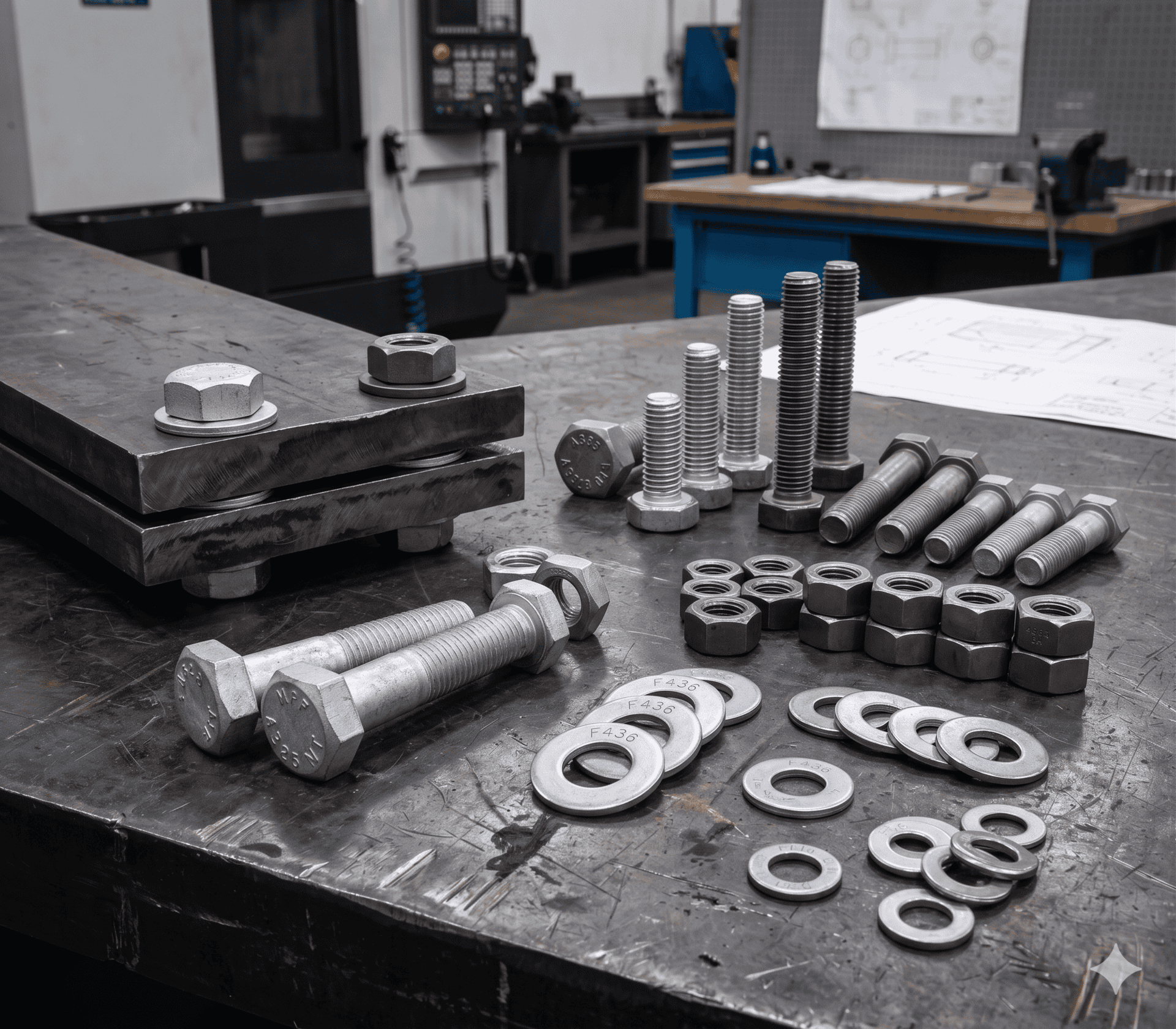
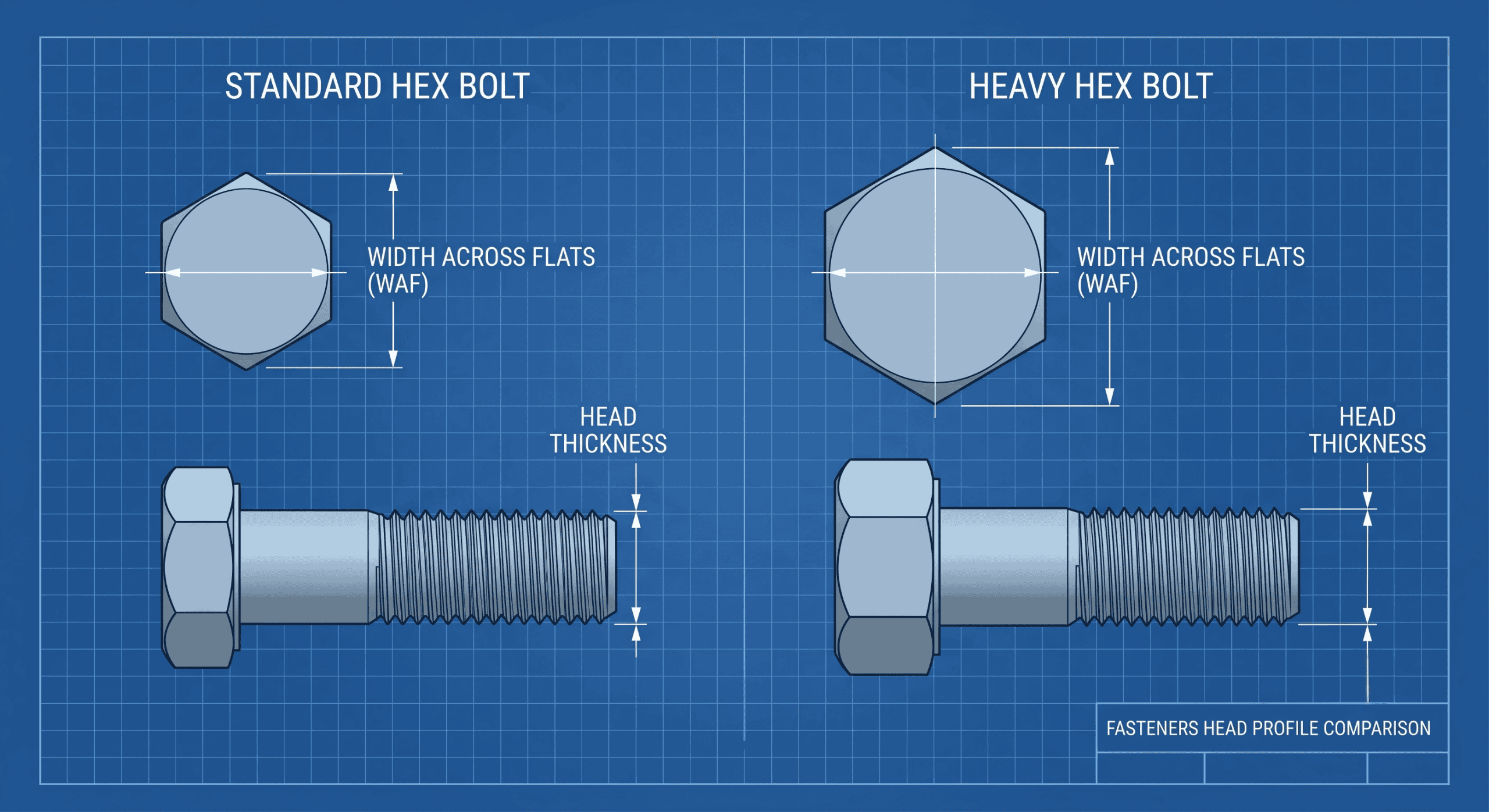
A heavy hex nut is a specialized internally threaded fastener designed with a larger profile than a standard finished hex nut. Specifically, the width across the flats (the distance from one flat side to the opposite flat side) is approximately 1/8 inch wider than that of standard hex nuts. Furthermore, heavy hex nuts are thicker, providing more internal threads to engage with the bolt.
This increased mass serves a critical engineering purpose. The wider dimensions create a larger bearing surface area against the joint or washer, which helps distribute the immense clamping force generated by high-strength structural bolts. The added thickness guarantees that the nut is strong enough to withstand the severe proof loads without thread stripping.
Because of this robust geometry, heavy hex nuts are exclusively used in load-critical environments such as structural steel buildings, suspension bridges, industrial infrastructure, and transmission towers. They are almost always paired with compatible heavy hex structural bolts (like those under ASTM F3125) and hardened steel washers.
3. Overview of ASTM A563, DH, and DH3
One of the most frequent points of confusion in the fastener supply chain is the relationship between ASTM A563, Grade DH, and Grade DH3. Here is the distinction made simple:
What is ASTM A563?
ASTM A563 is the standard specification for carbon and alloy steel nuts. It is an "umbrella" specification. You do not simply order an "ASTM A563 nut" because the standard covers numerous grades ranging from very low-strength nuts used in basic hardware to ultra-high-strength nuts used in heavy construction. To order correctly, you must specify the grade within ASTM A563.
The Role of Grade DH
ASTM A563 Grade DH is the premier high-strength grade within the A563 specification. These nuts are heat-treated and designed explicitly for use with high-strength structural bolts. When engineers specify structural steel bolting assemblies, Grade DH is typically the standard heavy hex nut chosen to provide the necessary proof load capacity for demanding connections.
The Role of Grade DH3
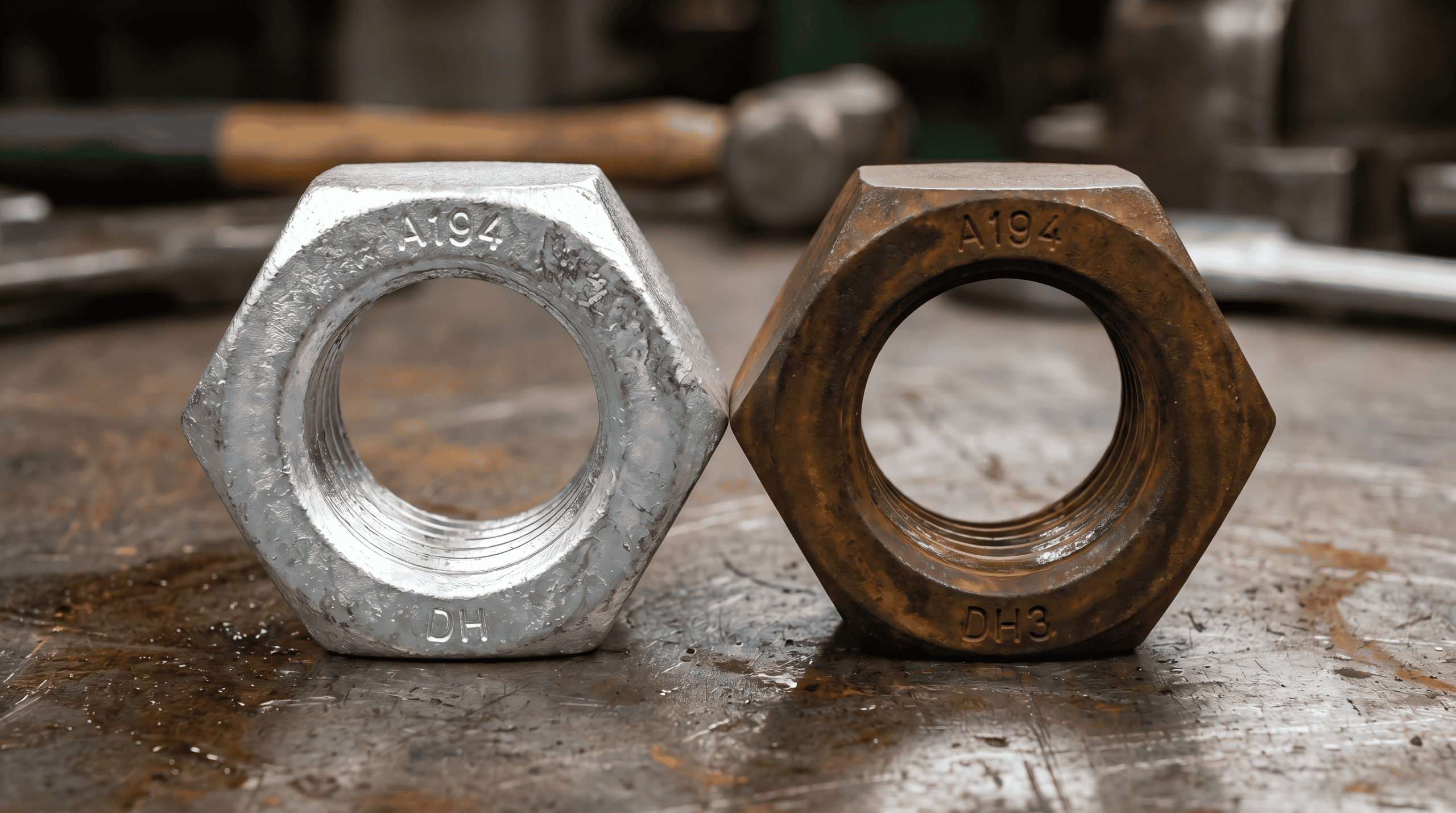
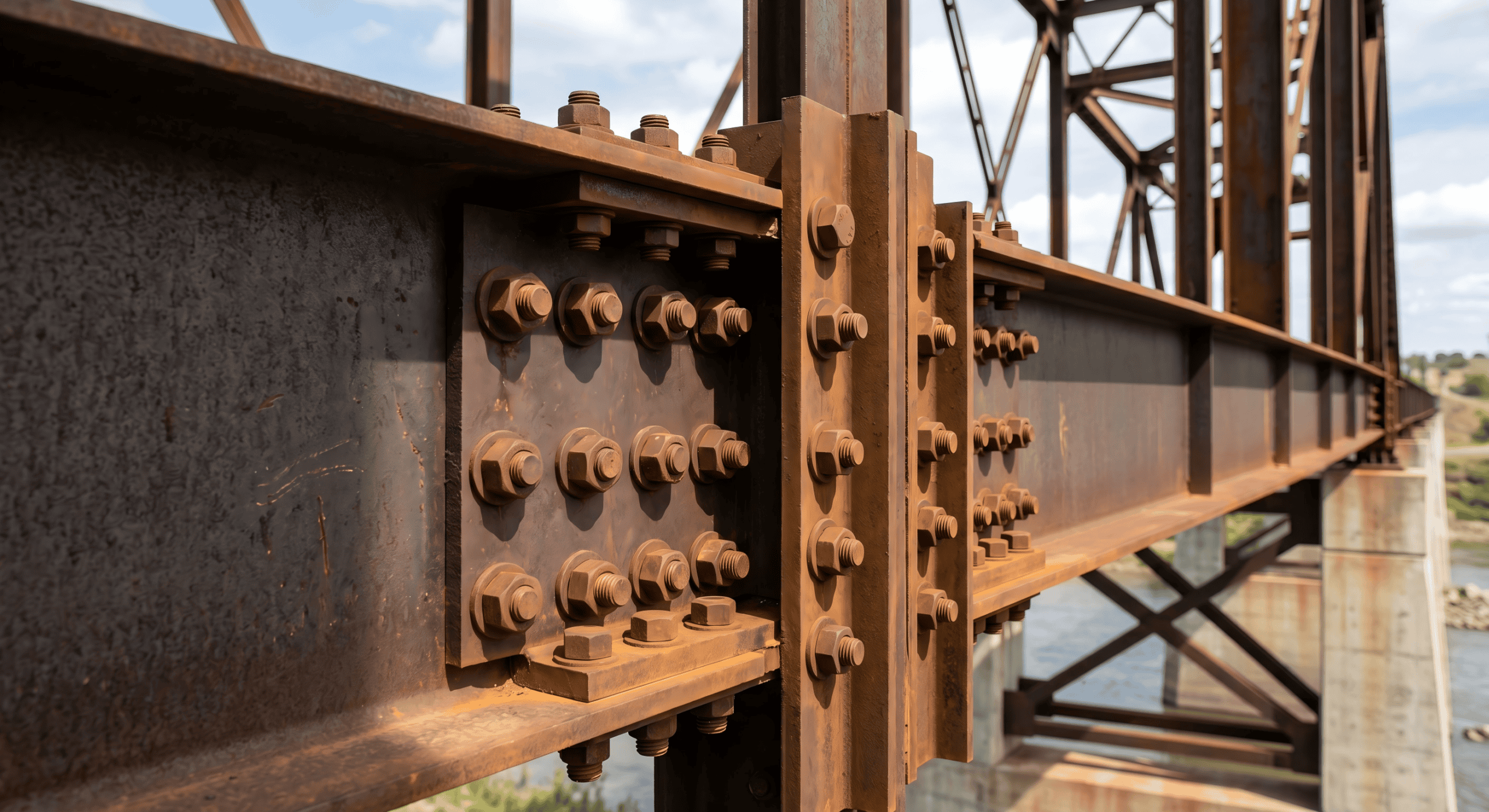
ASTM A563 Grade DH3 is a specialized high-strength grade. Like DH, it is heat-treated and exceptionally strong. However, DH3 is manufactured from weathering steel. It contains specific alloying elements (such as copper, chromium, and nickel) that allow the nut to develop a protective, rust-like patina when exposed to the elements. This grade is specifically intended for outdoor, unpainted atmospheric environments, matching the corrosion characteristics of weathering steel bridges and structures.
4. ASTM A563 vs DH vs DH3: Key Differences
To assist procurement teams and engineers in differentiating these critical structural nuts, the table below outlines the primary technical and commercial distinctions between Grade DH and Grade DH3 under the ASTM A563 specification.
| Feature / Property | ASTM A563 Grade DH | ASTM A563 Grade DH3 |
|---|---|---|
| Specification Status | A specific grade under ASTM A563 | A specific grade under ASTM A563 |
| Nut Style | Heavy Hex | Heavy Hex |
| Material Composition | Carbon steel or Alloy steel | Weathering steel (contains Cu, Cr, Ni, etc.) |
| Heat Treatment | Quenched and Tempered | Quenched and Tempered |
| Proof Load (Min) | 175,000 psi | 175,000 psi |
| Corrosion Resistance | Basic (relies on applied coatings) | Atmospheric (forms protective patina) |
| Typical Finish/Coating | Plain, Zinc Plated, Hot-Dip Galvanized | Plain (intended to be left bare to weather) |
| Matching Structural Bolt | ASTM F3125 (A325 Type 1, A490 Type 1) | ASTM F3125 (A325 Type 3, A490 Type 3) |
| Cost Level | Standard for high-strength bolting | Higher (due to specialty alloying elements) |
5. Strength and Mechanical Performance
When discussing the mechanical performance of heavy hex nuts, the most critical metric is the proof load. Unlike bolts, which are tested for tensile strength by pulling them apart, nuts are tested for proof load—the maximum axial load the nut can withstand without its internal threads stripping or the nut deforming.
Both Grade DH and Grade DH3 heavy hex nuts are powerhouses. They share identical mechanical properties, boasting a minimum proof load requirement of 175,000 psi. This immense strength ensures that the nut is stronger than the high-strength structural bolt it is paired with. In a properly engineered joint, if a catastrophic overload occurs, the bolt should yield and break before the nut's threads strip. Stripped threads offer no visual warning before failure, making nut strength an absolute priority.
Because DH and DH3 share the same strength level, selecting between them is never a matter of load capacity. Instead, selecting the appropriate nut grade depends entirely on the material intent and the environmental application dictated by the project design requirements. Buyers must evaluate the complete nut-and-bolt assembly to ensure the structural integrity matches the engineer's specifications.
6. Material and Coating Differences
The core difference between these two grades lies in their metallurgy and how they handle environmental exposure.
ASTM A563 Grade DH
Grade DH nuts are typically manufactured from medium carbon steel or alloy steel, which is then quenched and tempered to achieve its high proof load. However, bare carbon steel rusts quickly when exposed to moisture. Therefore, Grade DH nuts are often coated. For outdoor infrastructure, they are frequently hot-dip galvanized. Note: When a Grade DH nut is intended to be used with a hot-dip galvanized bolt, the nut's internal threads must be "overtapped" (cut slightly larger) to accommodate the thickness of the zinc coating on the bolt.
ASTM A563 Grade DH3
Grade DH3 is a weathering steel nut. It is alloyed with precise amounts of copper, chromium, nickel, and sometimes other elements. When exposed to alternating wet and dry weather cycles, this specific chemistry causes the steel to develop a dense, tightly adhering layer of rust (patina). This patina acts as a protective barrier, preventing further deep corrosion. Because the intended design is to let the steel weather naturally, DH3 nuts are almost always supplied in a plain, uncoated finish. They are highly specific to unpainted, outdoor steel structures.
7. Bolt, Nut, and Washer Compatibility
A heavy hex nut cannot be selected in a vacuum; it is part of an engineered fastening system. Structural bolting performance depends entirely on the full assembly, which includes the bolt, the nut, the washer, the coating compatibility, and the final installation method.
For Standard High-Strength Assemblies:
If a project specifies ASTM F3125 Grade A325 or Grade A490 structural bolts (Type 1, which means standard steel), the correct, compliant nut to use is the ASTM A563 Grade DH heavy hex nut. This assembly must be paired with an ASTM F436 Type 1 hardened steel washer.
For Weathering Steel Assemblies:
If the project specifies weathering steel structural bolts—designated as ASTM F3125 Grade A325 Type 3 or A490 Type 3—the nut must also be made of weathering steel to prevent galvanic corrosion and ensure uniform weathering of the joint. In this scenario, the compliant nut is the ASTM A563 Grade DH3 heavy hex nut, paired with an ASTM F436 Type 3 weathering steel washer.
Buyers should strictly verify complete assembly compatibility before purchasing. Mismatching a galvanized DH nut with an A490 bolt, or pairing a standard DH nut with a weathering Type 3 bolt, violates structural building codes and compromises the connection.
8. Applications: When to Use ASTM A563 DH or DH3
Engineers select the appropriate nut grade based on the project's load requirements, environmental conditions, and structural specifications.
Typical Applications for Grade DH
Grade DH is the standard high-strength nut for the vast majority of heavy structural construction. You will typically find DH heavy hex nuts used in:
- Commercial high-rise steel building frames.
- Enclosed manufacturing facilities and warehouses.
- Highway overpasses and bridges (when coated or painted).
- Heavy industrial machinery foundations.
Typical Applications for Grade DH3
Grade DH3 is a niche but critical fastener grade, restricted to outdoor projects designed with weathering steel (such as Corten). Common applications include:
- Unpainted highway bridges and railway trestles.
- Electrical transmission towers and utility poles located in remote areas where maintenance painting is impossible.
- Architectural steel structures designed with an intentional rusted aesthetic.
- Highway sign structures and guardrail assemblies.
9. Why Structural Buyers Get Confused About ASTM A563, DH, and DH3
Procurement errors often occur due to shorthand terminology used on job sites or older engineering drawings. Let's address the most common buyer confusions:
“Is DH the same as ASTM A563?”
No. Asking for an "A563 nut" is like asking a car dealer for a "vehicle." You must specify the model. DH is a specific high-strength heavy hex grade under the A563 specification. Other grades exist (like Grade A for low-carbon standard nuts, or Grade C), so specifying "Grade DH" is mandatory for high-strength structural orders.
“What is the difference between DH and DH3?”
They are equally strong. The difference is chemistry and environment. DH is for standard coated or indoor high-strength applications. DH3 contains specific alloys for outdoor, unpainted weathering steel applications.
“Which nut grade should match structural bolts?”
Always look at the bolt's "Type". If the bolt is Type 1 (standard steel), use Grade DH. If the bolt is Type 3 (weathering steel), use Grade DH3. Ensure this matches the project's approved drawings.
10. Buying Guide for Heavy Hex Structural Nuts
When preparing a Request for Quotation (RFQ) or purchase order for heavy hex structural nuts, clarity is key. Ensure you confirm the following details to avoid costly site rejections:
- Nut Specification: Explicitly state "ASTM A563".
- Nut Grade: Clearly indicate "Grade DH" or "Grade DH3".
- Matching Bolt: Know what bolt the nut will be threaded onto (e.g., A325, A490) to ensure thread pitch and coating allowances align.
- Washer Requirements: Order the corresponding F436 washers simultaneously to ensure complete assembly compatibility.
- Coating/Finish: Specify Plain, Zinc Plated, or Hot-Dip Galvanized (remembering that DH3 is almost always Plain). If ordering HDG DH nuts, specify they must be overtapped.
- Documentation: Always demand a Material Test Report (MTR). This certifies the chemical composition, heat treatment, and proof load testing, proving compliance with structural building codes.
How to Order / Quick Specs
QISHENG is a premier professional supplier of high-strength heavy hex structural nuts, matching structural bolts, and comprehensive fastening assemblies. We proudly support EPC contractors, industrial fastener distributors, and project procurement teams with reliable manufacturing, meticulous technical documentation, and customized global supply chain solutions.
Available Standards
ASTM A563 (Grades DH & DH3), ASTM F3125 structural bolts, ASTM A194 Grade 2H (where acceptable per code), and F436 washers.
Customization
Precise thread sizing, specialty anti-corrosion coatings (including HDG with overtapping), custom head/nut marking, and rugged export packaging.
Documentation (MTC)
Full Material Test Certificates (MTR/MTC), mechanical proof load reports, dimension inspections, and detailed commercial packing lists.
Export Support
Extensive experience with the North American structural market, seamless port documentation, and Third-Party Inspection (TPI) coordination.
Inquiry Details to Prepare
Nut grade (DH/DH3), matching bolt specification, nominal size, coating, required quantity, destination, and necessary certifications.
Technical Support
Our structural fastening engineers are available before you order if your project specifications or coating matchings are not yet finalized.
12. Conclusion
In the complex arena of structural steel fastening, assuming all nuts are created equal is a dangerous misconception. ASTM A563 serves as the broad standard for steel nuts, but it is the specific heavy hex grades—Grade DH and Grade DH3—that carry the massive loads required by modern infrastructure.
By understanding that Grade DH serves as the incredibly strong, standard-bearer for structural joints, and that Grade DH3 provides the same immense proof load while offering atmospheric corrosion resistance for weathering steel applications, procurement teams can order with confidence. Always ensure your selected nut grade precisely matches your high-strength bolt and washer specifications, verifying the complete assembly to guarantee a safe, code-compliant, and durable connection for your project.
13. FAQ
What is ASTM A563?
ASTM A563 is the standard specification covering the chemical and mechanical requirements for various grades of carbon and alloy steel nuts used for general structural and mechanical applications.
Is DH a grade under ASTM A563?
Yes. DH is a specific, high-strength heavy hex grade defined within the ASTM A563 specification. It is commonly used alongside high-strength structural bolts like ASTM A325 and A490.
What is the difference between DH and DH3?
While both are high-strength structural nuts with the same proof load requirement, Grade DH is made from carbon or alloy steel (often coated for corrosion resistance), whereas Grade DH3 is made from weathering steel, designed to develop a protective rust patina for unpainted outdoor use.
Which heavy hex nut grade is used with structural bolts?
ASTM A563 Grade DH is the standard nut for Type 1 structural bolts. ASTM A563 Grade DH3 is used with Type 3 (weathering steel) structural bolts. Alternatively, ASTM A194 Grade 2H is also frequently permitted as a substitute for Grade DH.
Are heavy hex nuts different from standard hex nuts?
Yes. Heavy hex nuts are manufactured slightly wider across the flats (typically 1/8 inch wider) and thicker than standard hex nuts, providing a larger bearing surface area to safely distribute structural loads.
Can DH3 be used in weathering steel applications?
Yes. In fact, Grade DH3 is specifically engineered for weathering steel applications. Its alloy composition allows it to rust naturally and match the performance and appearance of Type 3 structural steel and bolts.