

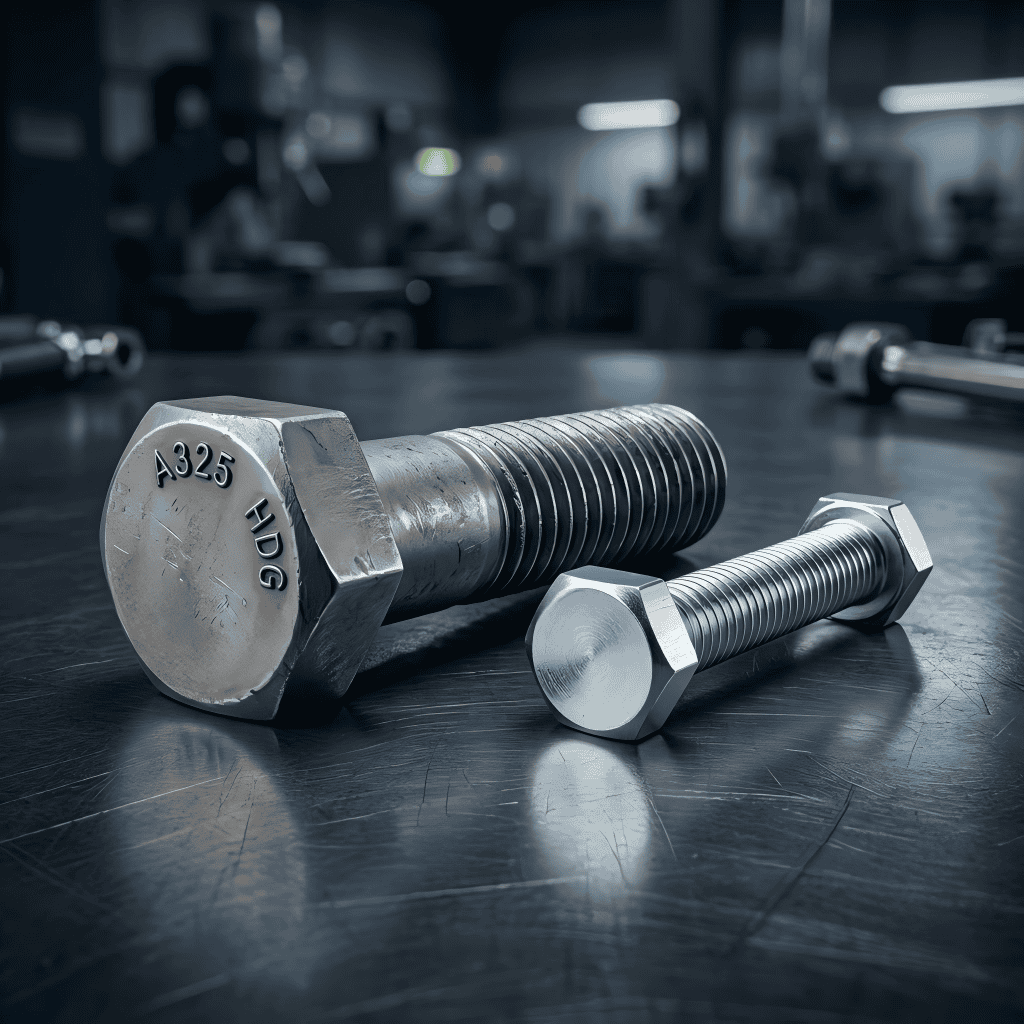
Heavy Hex Bolt vs Standard Hex Bolt: Which One Should Structural Buyers Choose?
1. Introduction
In the vast world of industrial fasteners, selecting the correct bolt can be the difference between a structurally sound project and a catastrophic failure. Two of the most commonly confused components in procurement are the heavy hex bolt and the standard hex bolt. At first glance, these fasteners may look nearly identical—both feature a hexagonal head designed to be driven by a wrench or socket. However, for buyers, contractors, and project engineers, treating them interchangeably is a critical error.
While a standard hex bolt is an incredibly versatile fastener used across countless industries, heavy hex bolts are engineered for an entirely different class of performance. They differ fundamentally in head dimensions, bearing surface area, material specifications, assembly compatibility, and intended structural applications.
Whether you are procuring materials for a commercial high-rise, a heavy-duty machinery assembly, or a bridge infrastructure project, knowing how to distinguish a heavy hex bolt vs standard hex bolt is essential. In this comprehensive guide, we will break down the precise dimensional differences, evaluate strength considerations, explore coating and corrosion issues, and provide actionable buyer selection criteria to ensure you specify the exact structural bolts required for your project.
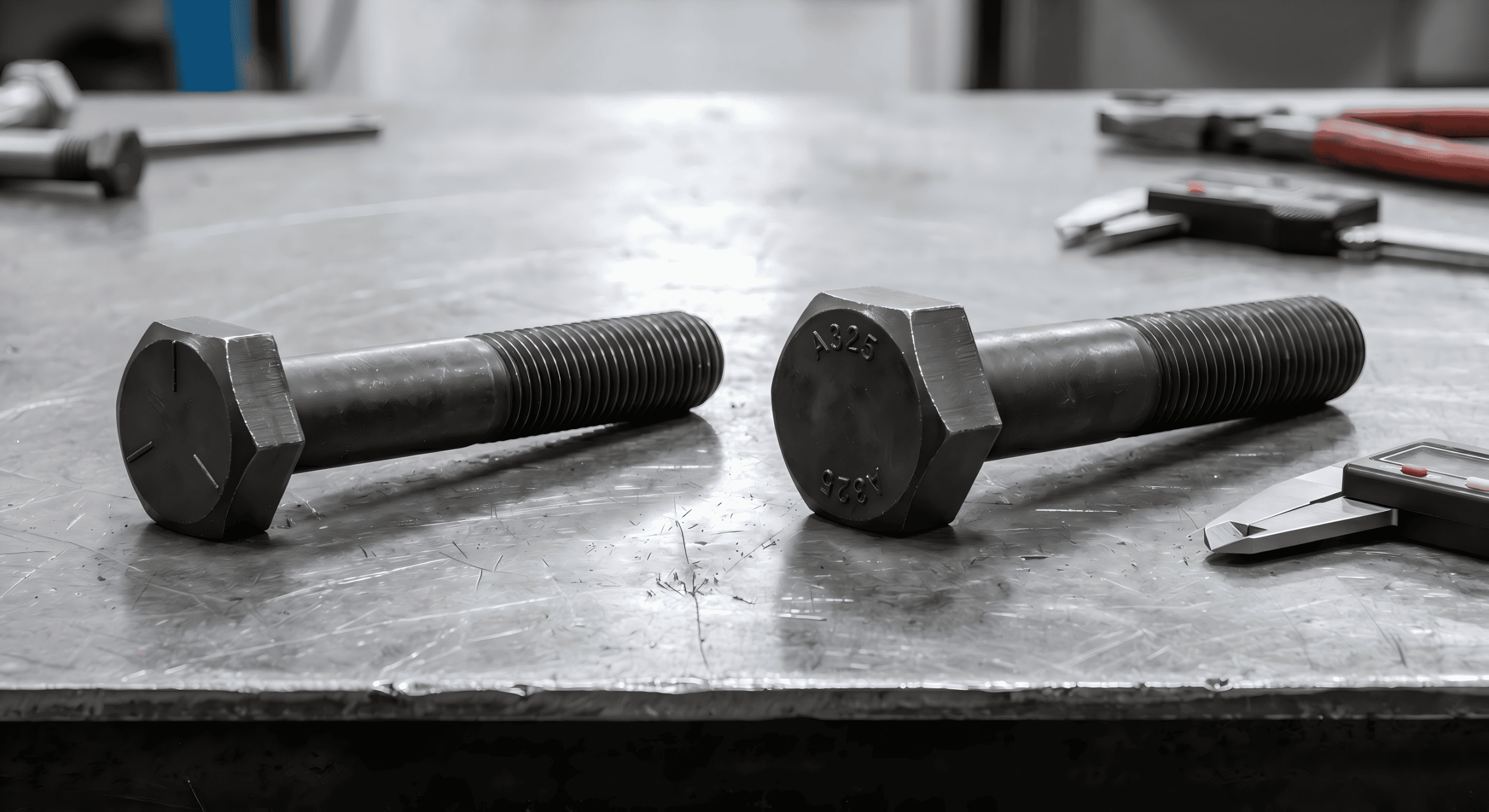
2. What Are Heavy Hex Bolts and Standard Hex Bolts?
Before diving into the dimensional math and engineering specifications, we must clearly define both fasteners.
What is a Heavy Hex Bolt?
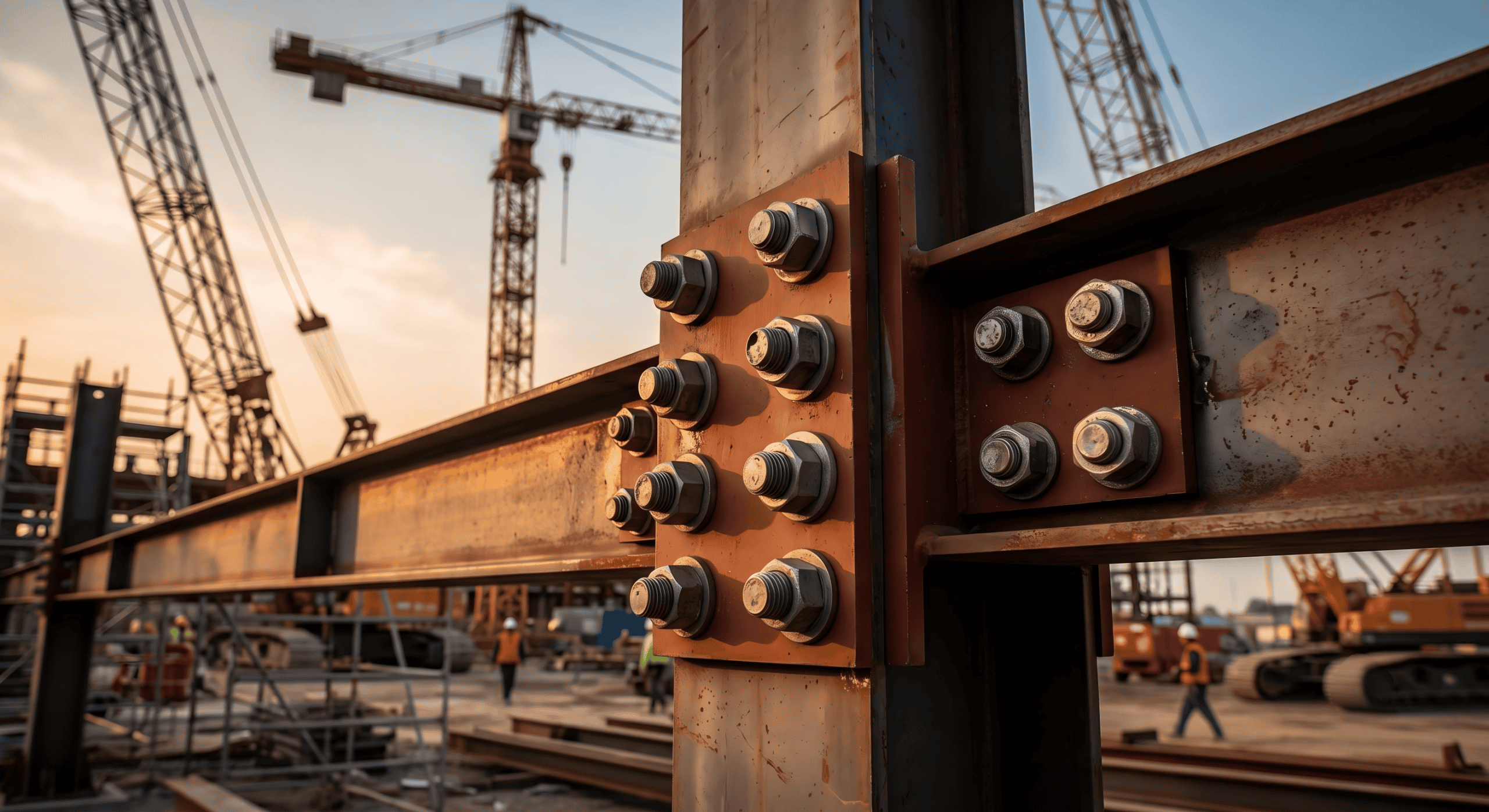
A heavy hex bolt is a threaded fastener characterized by a head that is significantly wider and thicker than standard variants. Engineered to manage massive loads, heavy hex bolts provide a broader bearing surface that distributes clamping force over a wider area of the connected material. Because of their robust geometry, they are the undisputed standard in heavy construction, particularly in structural steel connections like I-beams, girders, and heavy infrastructure.
What is a Standard Hex Bolt?
A standard hex bolt (often just referred to as a "hex bolt" or "hex cap screw," though slight technical differences exist between the two) features a more compact hexagonal head. It is the workhorse of general industry. Standard hex bolts are widely used in OEM manufacturing, general fabrication, automotive assemblies, machinery construction, and lighter building applications where extreme structural load distribution is not the primary engineering constraint.
3. Basic Dimensional and Design Differences
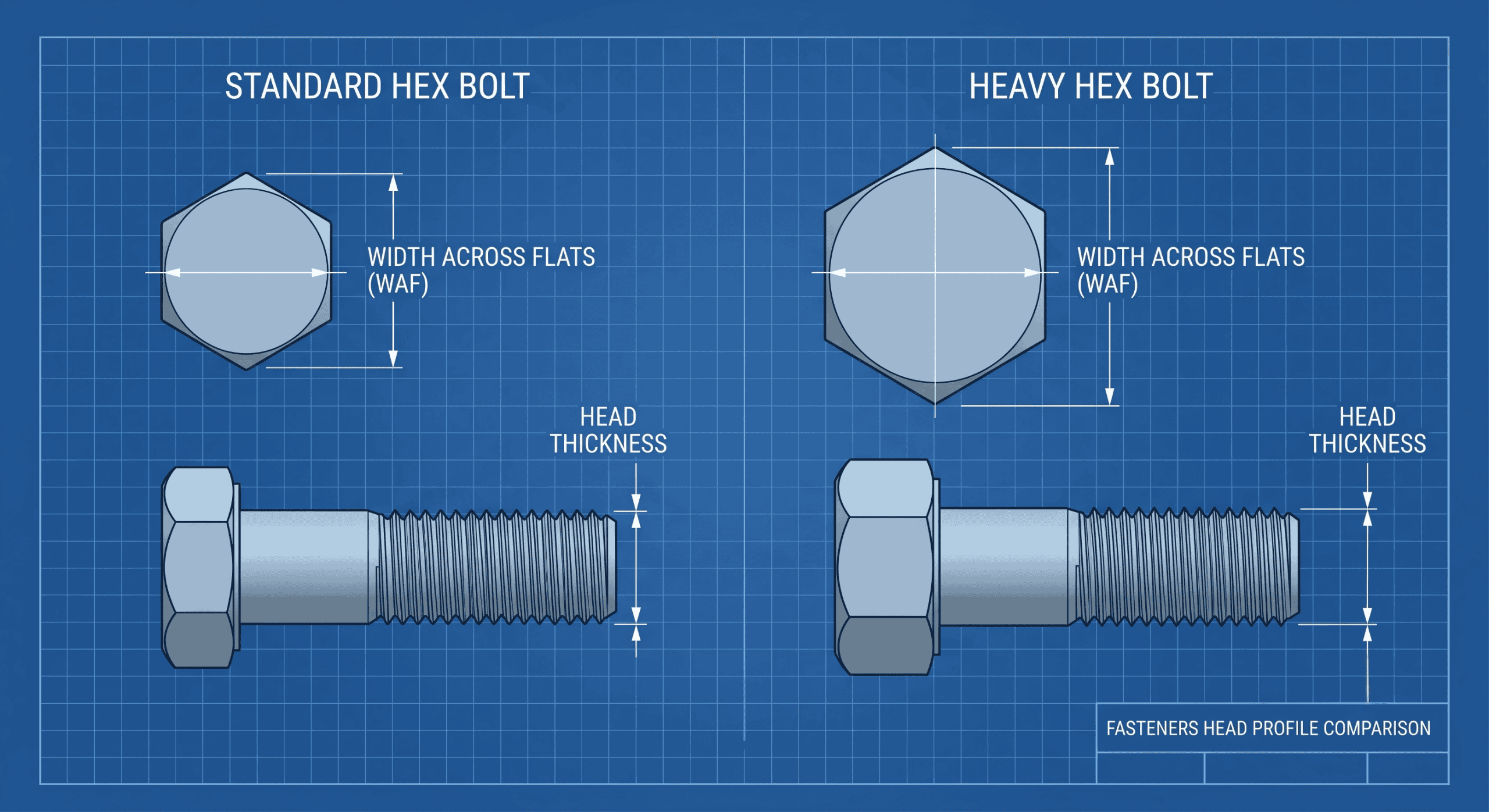
The primary physical distinction in the heavy hex bolt vs hex bolt debate comes down to the dimensions of the head.
Head Width (Width Across Flats): The most recognizable difference is the width across the flats (WAF)—the distance from one flat side of the hex head to the opposite flat side. As a general rule in imperial sizes, the head of a heavy hex bolt is 1/8 inch larger across the flats than a standard hex bolt of the exact same shank diameter. For example, a 1/2-inch standard hex bolt typically uses a 3/4-inch wrench, while a 1/2-inch heavy hex bolt requires a 7/8-inch wrench.
Head Thickness: In addition to being wider, the head of a heavy hex bolt is thicker. This increased mass is not arbitrary; it prevents the wrench from slipping under extremely high torque applications and provides higher resistance to the head stripping or shearing off the shank under tension.
Bearing Surface and Load Distribution: The wider head inherently creates a larger bearing surface under the head of the bolt. In structural steelwork, bolt holes are often made slightly oversized (e.g., 1/16" larger than the bolt) to allow for the alignment of massive steel beams. The wider bearing surface of a heavy hex bolt ensures that the clamping load is spread out safely, preventing the bolt head from crushing the steel or pulling through the oversized hole.
4. Heavy Hex Bolt vs Standard Hex Bolt: Key Differences
To assist procurement teams and engineers, the table below provides a direct comparison of the key characteristics distinguishing heavy hex bolts from standard hex bolts.
| Feature / Characteristic | Heavy Hex Bolt | Standard Hex Bolt |
|---|---|---|
| Head Dimensions (WAF) | Generally 1/8" wider than standard | Standard width for given diameter |
| Head Thickness | Thicker, designed for high-torque engagement | Standard thickness, adequate for general use |
| Bearing Surface Area | Large, distributes load widely over steel | Standard, suitable for standard clearance holes |
| Typical ASTM Standards | ASTM F3125 (A325, A490), A307 Grade B | ASTM A307 Grade A, SAE J429 (Gr 2, 5, 8) |
| Strength Range | Typically high-strength (120 ksi - 150 ksi) | Low to high strength depending on grade |
| Common Nut Pairing | Heavy Hex Nuts (ASTM A563, A194) | Standard Hex Nuts, Finished Hex Nuts |
| Washer Requirements | Hardened structural washers (ASTM F436) | Standard flat washers (USS, SAE) |
| Typical Applications | Structural steel, bridges, heavy infrastructure | Machinery, automotive, general construction |
| Cost Level | Generally higher (due to material mass & specs) | Generally lower (economical for volume use) |
5. Strength and Mechanical Performance
A very common misconception among buyers is assuming that a larger bolt head automatically means a stronger material. It is crucial to understand that bolt head style and material strength are two separate variables.
Heavy hex bolts are overwhelmingly associated with high-strength structural specifications, such as ASTM F3125 Grade A325 (120 ksi tensile strength) and Grade A490 (150 ksi tensile strength). Because heavy steel construction demands high clamping forces, the heavy hex geometry is the perfect vessel for these high-strength alloys. However, you can also purchase heavy hex bolts in low-carbon steel (e.g., ASTM A307 Grade B) for specific applications like cast iron flanged piping.
Conversely, standard hex bolts can also achieve immense strength. An SAE J429 Grade 8 standard hex bolt, commonly used in heavy machinery and automotive engines, boasts a tensile strength of 150 ksi—matching the strength of an A490 structural bolt.
Therefore, buyers should evaluate mechanical properties based on the applicable standard, grade, and project requirements rather than head shape alone. Structural buyers choose heavy hex structural bolts not just because the steel is strong, but because the entire assembly system (bolt head size, nut thickness, washer hardness) is engineered specifically for load-critical steel friction and bearing connections.
6. Material and Coating Differences
The service environment dictates the material and coating of any fastener, but there are specific nuances when comparing standard and heavy hex structural bolts.
Standard hex bolts are frequently manufactured from low-to-medium carbon steel and are easily found in plain finish, clear zinc plating, or yellow zinc dichromate for light to moderate corrosion resistance. Stainless steel (304/316) is also incredibly common for standard hex bolts in food processing or marine hardware.
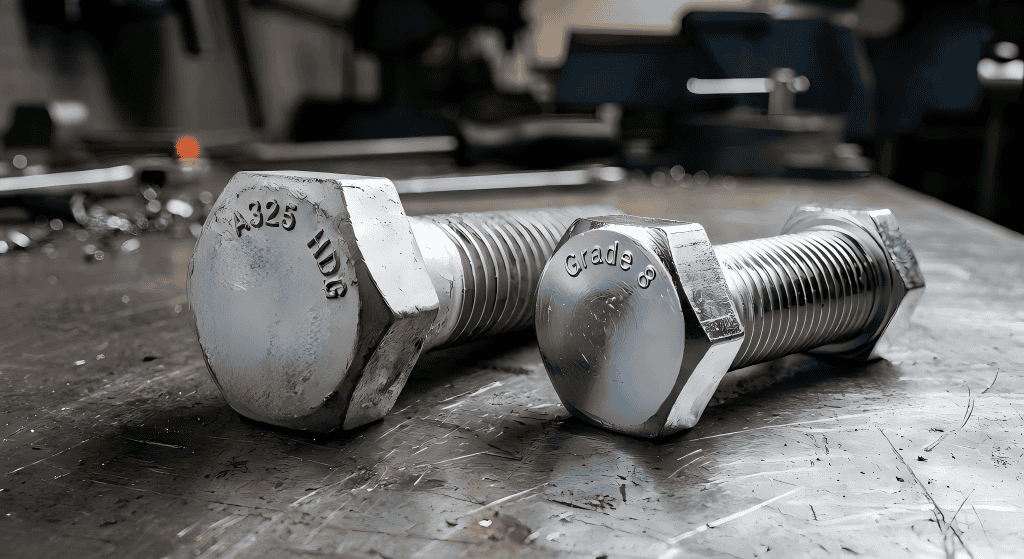
For heavy hex bolts, particularly high-strength structural bolts, coating requires careful consideration. Because structural steel frames are often exposed to the elements, ASTM F3125 Grade A325 heavy hex bolts are frequently hot-dip galvanized (HDG) to withstand harsh weather. The thick zinc layer provides decades of corrosion protection.
However, coating limitations exist. If a project requires ultra-high-strength heavy hex bolts (like ASTM F3125 Grade A490), hot-dip galvanizing and standard electroplating are strictly prohibited. These high-strength alloys are susceptible to hydrogen embrittlement—a condition where the galvanizing process causes microscopic cracking that leads to sudden, catastrophic bolt failure. In these environments, alternative coatings like zinc-aluminum flake (e.g., Dacromet, Geomet) must be specified.
7. Nuts and Washer Compatibility
A structural connection is only as strong as its weakest component. Understanding assembly compatibility is vital for procurement teams.
Standard Hex Assemblies: Standard hex bolts are typically paired with standard "finished" hex nuts and standard flat washers (like USS or SAE washers). These components are designed for general clamping where the load is moderate and the hole tolerances are tight.
Heavy Hex Assemblies: Heavy hex structural bolts absolutely require compatible heavy hex nuts. Utilizing a standard hex nut on a heavy hex structural bolt is a severe code violation in steel construction. Heavy hex nuts (such as ASTM A563 Grades C, DH, or ASTM A194 Grade 2H) provide the necessary thread engagement length and wall thickness to prevent stripping under massive structural tension. Furthermore, heavy hex bolts must be paired with hardened steel washers (ASTM F436). Standard washers will simply crush or deform under the extreme clamping force of a structural bolt.
Buyers must verify complete assembly compatibility, ensuring that bolt grade, nut grade, and washer specifications match perfectly.
8. Applications: When to Use Heavy Hex Bolts or Standard Hex Bolts
The choice between heavy hex bolt vs standard hex bolt ultimately comes down to the engineering application and compliance codes.
When to Use Heavy Hex Bolts
Heavy hex bolts are the backbone of the EPC (Engineering, Procurement, and Construction) sector. They are specifically mandated in load-critical environments where structural integrity is paramount. Typical applications include:
- Structural steel framing for high-rise buildings and warehouses.
- Bridge construction and highway infrastructure.
- Electrical transmission towers and telecommunication masts.
- Heavy industrial plants, refineries, and offshore platforms.
- Large diameter piping flanges and heavy-duty industrial valves.
When to Use Standard Hex Bolts
Standard hex bolts are the preferred choice when space is limited, structural codes do not dictate heavy hex dimensions, and loads are manageable. Typical applications include:
- Assembly of manufacturing machinery and conveyor equipment.
- Automotive, agricultural, and transportation equipment chassis.
- General metal fabrication and structural supports for non-critical loads.
- Piping supports, brackets, and general maintenance (MRO) tasks.
- Wood-to-wood or wood-to-metal construction assemblies.
9. Why Structural Buyers Often Prefer Heavy Hex Bolts
In structural steel projects, the preference for heavy hex bolts is not just a habit—it is written into the engineering codes. The American Institute of Steel Construction (AISC) and the Research Council on Structural Connections (RCSC) base their design calculations on the bearing areas and tension capacities of heavy hex structural bolts.
"Can a standard hex bolt replace a heavy hex bolt?"
In a structural steel connection designed for an ASTM F3125 heavy hex bolt, the answer is an absolute no. A standard hex bolt, even if made of high-strength Grade 8 steel, lacks the bearing surface area required for oversized structural holes. Using a standard hex bolt could result in the head pulling through the steel member or failing to distribute stress adequately, leading to joint failure.
"Do structural projects require heavy hex bolts by specification?"
Yes. When an engineering drawing specifies "structural bolts" or references ASTM F3125, A325, or A490, it is implicitly demanding the heavy hex geometry. Deviating from this requires formal approval from the Engineer of Record.
10. Buying Guide for Heavy Hex Bolts vs Standard Hex Bolts
Procuring industrial fasteners requires exact precision. A single misinterpreted line item on a purchase order can cause costly site delays. Before placing an order for bolts, procurement teams should confirm the following details:
- Bolt Type: Explicitly state "Heavy Hex" or "Standard Hex". Never assume "Hex Bolt" implies the heavy variant.
- Standard and Grade: Specify the exact standard (e.g., ASTM F3125 Grade A325, SAE J429 Grade 5, ASTM A307).
- Nut and Washer Requirements: Ensure the requested nuts (e.g., A563 Heavy Hex) and washers (e.g., F436) are fully compatible with the bolt grade and type.
- Coating/Finish: Specify Plain, Zinc Plated, Hot-Dip Galvanized, or Zinc-Flake. Ensure the coating complies with the strength grade limitations (no HDG for A490).
- Dimensions: Provide exact diameter, length, and thread pitch (UNC or UNF). Confirm if the threads need to be fully threaded or partially threaded.
- Documentation: For structural applications, always request a Material Test Certificate (MTC) to verify chemical and mechanical compliance.
Because of the critical nature of these components, sourcing from a reliable fastener manufacturer with strict quality control and traceability is essential.
How to Order / Quick Specs
QISHENG is a premier professional supplier of heavy hex bolts, standard hex bolts, and fully compatible fastening solutions. We proudly support EPC contractors, industrial fastener distributors, and project procurement teams with reliable manufacturing, comprehensive technical documentation, and customized supply chain operations globally.
Available Products
Heavy hex bolts, standard hex bolts, heavy hex nuts, standard finished hex nuts, and hardened structural washers.
Available Standards
ASTM F3125 (A325/A490), ASTM A307, SAE J429, and ISO/DIN hex bolt standards depending on specific application.
Customization
Precise thread sizing, specialty material grades, advanced anti-corrosion coatings, custom head marking, and rugged export packaging.
Documentation (MTR)
Full Material Test Certificates (MTC), mechanical test reports, dimension inspections, and detailed packing lists provided.
Export Support
Extensive experience with the North American market, seamless port documentation, and Third-Party Inspection (TPI) coordination.
Technical Support
Our engineering team is available before ordering if your project specifications or fastener matching requirements are not yet finalized.
12. Conclusion
Understanding the nuances of the heavy hex bolt vs standard hex bolt is a fundamental requirement for anyone involved in industrial procurement and construction. The main differences are not merely aesthetic; they revolve around precise head dimensions, enhanced bearing surface area, rigorous specification usage, and strict assembly compatibility.
Heavy hex bolts are engineered for the extreme demands of structural steel connections, ensuring that massive loads are distributed safely across structural joints. Standard hex bolts, while incredibly strong in their own right depending on the grade, are designed with a smaller profile suited for general industrial machinery, equipment fabrication, and non-structural bolting.
By accurately matching the correct bolt type, standard, nut, and washer to your specific application environment, you safeguard your project against structural failure and ensure compliance with critical engineering codes.
13. FAQ
What is the difference between a heavy hex bolt and a standard hex bolt?
The primary difference is the size of the head. A heavy hex bolt has a head that is thicker and wider (typically 1/8" wider across the flats) than a standard hex bolt of the same shank diameter, providing a larger bearing surface for structural loads.
Are heavy hex bolts stronger than standard hex bolts?
Not necessarily. Strength is determined by the material grade (e.g., ASTM A325, SAE Grade 8), not the shape of the head. While heavy hex bolts are commonly made from high-strength steel for structural use, standard hex bolts can also be manufactured from high-strength alloys.
Can a standard hex bolt be used in structural steel connections?
Typically, no. Structural steel codes generally mandate the use of heavy hex structural bolts (like ASTM F3125) because their larger bearing surface prevents the bolt head from pulling through the oversized holes commonly used in steel framework.
Do heavy hex bolts require heavy hex nuts?
Yes. Heavy hex bolts must be paired with compatible heavy hex nuts (such as ASTM A563 or A194) and hardened washers to ensure the nut has sufficient thread engagement and wall thickness to handle the bolt's high tension.
Are heavy hex bolts more expensive than standard hex bolts?
Generally, yes. Because heavy hex bolts contain more raw steel mass in the head and are often manufactured to stricter structural testing specifications, they tend to carry a higher price point than standard hex bolts used for general hardware.
Which bolt type is better for steel construction?
The heavy hex bolt is the superior and legally mandated choice for load-critical structural steel construction, as it complies with AISC design standards for friction and bearing connections.