

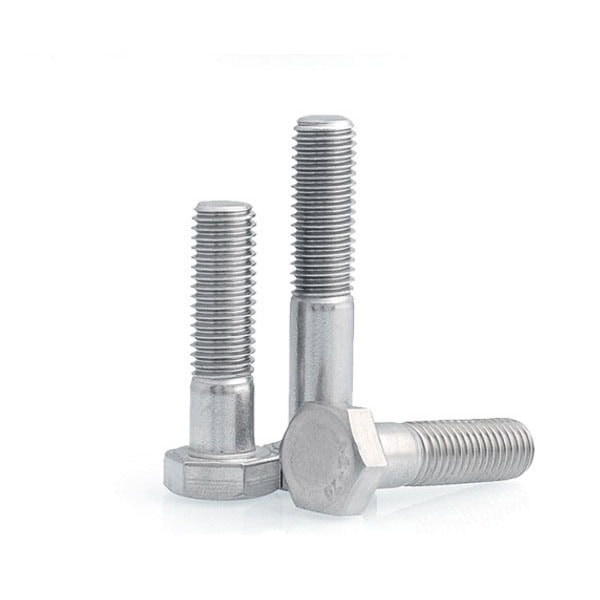
Hex Bolts Guide: Types, Grades & Applications
A catastrophic failure in a mining haul truck’s suspension system. The culprit? Grade 2 hex bolts mistakenly installed where Grade 8 fasteners were specified. This single procurement error cost the operation $47,000 in downtime and emergency repairs. For sourcing managers and mechanical engineers across North America, understanding hex bolt specifications is not academic—it directly impacts operational safety, equipment longevity, and your bottom line.
Hex bolts remain the backbone of structural and mechanical assemblies in industries ranging from heavy construction to precision manufacturing. Yet confusion persists around material grades, head markings, proof loads, and thread tolerances. This guide eliminates ambiguity. You will learn how to decode SAE and ASTM standards, interpret mechanical properties, and implement quality control protocols that prevent costly specification mismatches.
Core Technical Differences: SAE Grades vs. ASTM Specifications
Hex bolts manufactured for the North American market fall under two primary standardization systems: SAE J429 (Society of Automotive Engineers) for inch-series fasteners and ASTM specifications for both inch and metric variants. Each system defines material chemistry, heat treatment requirements, and mechanical performance thresholds.
SAE J429 Grade System (Inch-Series Hex Bolts)
SAE grades are identified by radial lines on the bolt head. These markings are not decorative—they indicate the material’s minimum tensile strength and yield strength:
- Grade 2: Low-carbon steel. No head markings. Minimum tensile strength of 60,000 psi (414 MPa). Used in non-critical applications where frequent disassembly occurs. Not heat-treated.
- Grade 5: Medium-carbon steel, quenched and tempered. Three radial lines on the head. Minimum tensile strength of 120,000 psi (827 MPa). Proof load of 85,000 psi. Standard for automotive and general industrial use.
- Grade 8: Medium-carbon alloy steel, quenched and tempered. Six radial lines on the head. Minimum tensile strength of 150,000 psi (1,034 MPa). Proof load of 120,000 psi. Required for high-stress structural joints and heavy equipment.
The proof load represents the maximum stress a bolt can withstand without permanent deformation. Exceeding this threshold results in thread stripping or shank elongation that compromises joint integrity.
ASTM Specifications for Specialized Applications
ASTM standards address specific environmental and operational demands that SAE grades do not cover:
- ASTM A193 Grade B7: Chromium-molybdenum alloy steel. Designed for high-temperature service (up to 1000°F / 538°C). Minimum tensile strength of 125,000 psi. Used in pressure vessels, petrochemical piping, and power generation.
- ASTM A325: Structural bolts for steel-to-steel connections in building frameworks and bridges. Available in Type 1 (medium-carbon steel), Type 2 (weathering steel), and Type 3 (atmospheric corrosion-resistant steel). Minimum tensile strength of 120,000 psi for sizes ½” to 1″.
- ASTM F3125 Grade A490: Replaces the legacy A490 specification. Quenched and tempered alloy steel for structural applications requiring higher strength than A325. Minimum tensile strength of 150,000 psi. Not recommended for galvanizing due to hydrogen embrittlement risk.
Chemical composition directly influences performance. Grade B7 bolts contain 0.37–0.49% carbon, 0.75–1.00% chromium, and 0.15–0.25% molybdenum per ASTM A193. This alloy structure maintains tensile strength at elevated temperatures where plain carbon steel would soften.
Metric Property Classes (ISO 898-1)
Metric hex bolts use a two-number property class system (e.g., 8.8, 10.9, 12.9). The first number multiplied by 100 gives the minimum tensile strength in MPa. The second number multiplied by 10 indicates the ratio of yield strength to tensile strength:
- Class 8.8: 800 MPa tensile strength, 640 MPa yield strength. Equivalent to SAE Grade 5.
- Class 10.9: 1,000 MPa tensile strength, 900 MPa yield strength. Comparable to SAE Grade 8.
- Class 12.9: 1,200 MPa tensile strength, 1,080 MPa yield strength. Used in aerospace and high-performance automotive applications.
Detailed Comparison Table: Mechanical Properties by Grade
The following table consolidates verified mechanical properties per official standards. All values are minimum requirements unless otherwise noted:
| Grade/Class | Standard | Material | Head Marking | Tensile Strength (psi / MPa) | Proof Load (psi / MPa) | Typical Applications |
|---|---|---|---|---|---|---|
| SAE Grade 2 | SAE J429 | Low-carbon steel | None | 60,000 / 414 | 33,000 / 228 | Light-duty machinery, non-critical assemblies |
| SAE Grade 5 | SAE J429 | Medium-carbon steel, Q&T | 3 radial lines | 120,000 / 827 | 85,000 / 586 | Automotive, general industrial equipment |
| SAE Grade 8 | SAE J429 | Medium-carbon alloy, Q&T | 6 radial lines | 150,000 / 1,034 | 120,000 / 827 | Heavy equipment, structural joints, mining |
| ASTM A193 B7 | ASTM A193 | Cr-Mo alloy steel | B7 or manufacturer mark | 125,000 / 862 | 105,000 / 724 | High-temperature service, pressure vessels |
| ASTM A325 Type 1 | ASTM F3125 | Medium-carbon steel, Q&T | A325 or A325M | 120,000 / 827 (½”–1″) | 85,000 / 586 | Structural steel connections, bridges |
| ASTM A490 Type 1 | ASTM F3125 | Alloy steel, Q&T | A490 or A490M | 150,000 / 1,034 | 120,000 / 827 | High-strength structural connections |
| ISO Class 8.8 | ISO 898-1 | Medium-carbon steel, Q&T | 8.8 | 116,000 / 800 | 92,800 / 640 | Metric machinery, international equipment |
| ISO Class 10.9 | ISO 898-1 | Alloy steel, Q&T | 10.9 | 145,000 / 1,000 | 130,500 / 900 | High-performance automotive, aerospace |
Critical Note: Proof load testing per ASTM F606 requires specialized hydraulic tensile testers. Buyers should request certified test reports (MTCs per EN 10204 3.1) that document actual tested values, not just material certifications.
Industry Applications in North America
Hex bolt selection depends on load dynamics, environmental exposure, and regulatory compliance. The following applications reflect real-world North American industrial demands:
United States Infrastructure and Heavy Manufacturing
The American Institute of Steel Construction (AISC) mandates ASTM A325 or A490 bolts for structural steel connections in buildings exceeding three stories. Bridge construction follows similar protocols under AASHTO standards. Grade 8 hex bolts dominate in:
- Earthmoving equipment: Excavator boom assemblies, dozer blade mounts, and loader bucket pins experience shock loads exceeding 100,000 psi. Grade 8 fasteners prevent catastrophic joint failure.
- Wind turbine tower flanges: Bolted connections in tower sections must withstand cyclical wind loads and thermal expansion. ASTM A193 B7 studs are specified for their fatigue resistance.
- Rail infrastructure: Track fastening systems and rail joint bars use **heavy-duty hex bolts** meeting AAR M-209 standards (which reference ASTM A449 for high-strength requirements).
Canadian Mining and Extreme Cold-Weather Operations
Canada’s mining sector operates equipment in temperatures reaching -40°F (-40°C). Standard carbon steel bolts become brittle at these extremes. Procurement specifications require:
- Charpy V-notch impact testing per ASTM A320 to verify ductility at low temperatures. Grade B7 studs must demonstrate minimum 15 ft-lbs impact energy at -20°F.
- Haul truck suspension systems: Oil sands operations in Alberta use SAE Grade 8 bolts with supplemental Charpy testing. A single haul truck carries 400-ton loads; fastener failure risks multi-million-dollar equipment damage.
- Conveyor systems in potash mines: Corrosive environments demand stainless steel hex bolts (ASTM F593 Group 1 or 2) or zinc-nickel plated Grade 8 fasteners with minimum 1,000-hour salt spray resistance per ASTM B117.
Petrochemical and Energy Sector
Refineries and natural gas processing plants operate under ASME Boiler and Pressure Vessel Code (BPVC). Flange connections in piping systems handling hydrocarbons at elevated temperatures require:
- ASTM A193 Grade B7 or B16 studs (B16 for higher temperatures up to 1,100°F / 593°C).
- ASTM A194 Grade 2H heavy hex nuts to match stud strength.
- Dimensional compliance with ASME B16.5 for flange bolt hole spacing and thread engagement length.
Sourcing and Quality Control: What Buyers Must Verify
Substandard fasteners enter North American supply chains through mismarked imports and counterfeit certifications. Implementing a rigorous inspection protocol protects against specification failures:
Dimensional Verification per ASME B18.2.1
ASME B18.2.1 defines tolerances for hex bolt head dimensions, thread pitch, and shank diameter. Use calibrated tools to verify:
- Head width across flats (WAF): A 1/2″-13 Grade 8 bolt must have a WAF of 0.75″ ± 0.005″.
- Thread pitch diameter: Use GO/NO-GO thread gauges per ASME B1.2. A NO-GO gauge entering more than two threads indicates undersized threads that reduce clamp load.
- Shank length and thread runout: Partially threaded hex bolts must meet minimum thread engagement per ASME B18.2.1 Table 4.
Hardness Testing and Head Marking Validation
Rockwell hardness testing (HRC scale) confirms heat treatment quality:
- SAE Grade 5: HRC 25–34 per SAE J429 Table 4.
- SAE Grade 8: HRC 33–39.
- ASTM A193 B7: HRC 35 maximum (to prevent brittle fracture in high-temperature service).
Counterfeit bolts often display correct head markings but fail hardness tests. A portable Rockwell tester (Type N or Type R for small fasteners) provides field verification. Reject any lot where sampled bolts fall outside the specified hardness range.
Material Test Certificates (MTCs) and Traceability
Reputable suppliers provide MTCs per EN 10204 Type 3.1 (manufacturer and independent inspection) or Type 3.2 (manufacturer and third-party inspection). These certificates must include:
- Heat number traceability linking the bolt lot to the steel mill’s ladle analysis.
- Actual chemical composition (carbon, manganese, chromium, molybdenum percentages).
- Mechanical test results: Tensile strength, yield strength, elongation percentage, and reduction of area.
- Heat treatment records: Quench temperature, tempering temperature, and soak time.
Request batch-specific MTCs, not generic certificates. A single MTC covering multiple production runs indicates inadequate quality control.
Coating and Corrosion Resistance Validation
Zinc plating thickness per ASTM B633 must meet Service Condition (SC) classifications:
- SC1: Mild indoor environments. Minimum 5 µm zinc thickness.
- SC3: Moderate outdoor exposure. Minimum 12 µm zinc thickness.
- SC4: Severe marine or industrial atmospheres. Minimum 25 µm zinc thickness or zinc-nickel alloy plating.
Use a coating thickness gauge (magnetic induction or eddy current type) to verify plating depth. Insufficient coating leads to red rust formation within months in humid or coastal environments.
Reliable Sourcing for Bulk Orders
Successful bulk procurement strategies include:
- Pre-shipment inspection: Engage third-party inspection agencies (e.g., SGS, Bureau Veritas) to perform dimensional checks, hardness testing, and MTC verification at the manufacturer’s facility before shipment.
- First-article inspection (FAI): Test the initial production sample against all specifications. Approve full production only after FAI passes dimensional, mechanical, and chemical analysis.
- Supplier audits: ISO 9001:2015 certification indicates a quality management system is in place, but on-site audits verify actual manufacturing controls, calibration records, and traceability procedures.
When sourcing hex bolts for critical applications, partner with suppliers who demonstrate technical expertise and transparent quality documentation. QISHENG (Jiangyin Qi Sheng International Trading Co., Ltd.) specializes in providing certified fasteners that meet SAE, ASTM, and ISO standards for North American industrial markets. Our inventory includes Grade 5, Grade 8, ASTM A193 B7, and A325 hex bolts with full material traceability and third-party test reports.
Whether you require structural bolts for bridge construction, high-temperature studs for petrochemical flanges, or **custom fastener solutions** for specialized equipment, our engineering team ensures specification compliance at every stage. All shipments include batch-specific MTCs, dimensional inspection reports, and coating thickness certifications.
For technical assistance with fastener selection or to request a quote for bulk orders, **contact our fastener experts** at QISHENG. We provide rapid response to RFQs, sample testing services, and logistics support across the United States and Canada.