

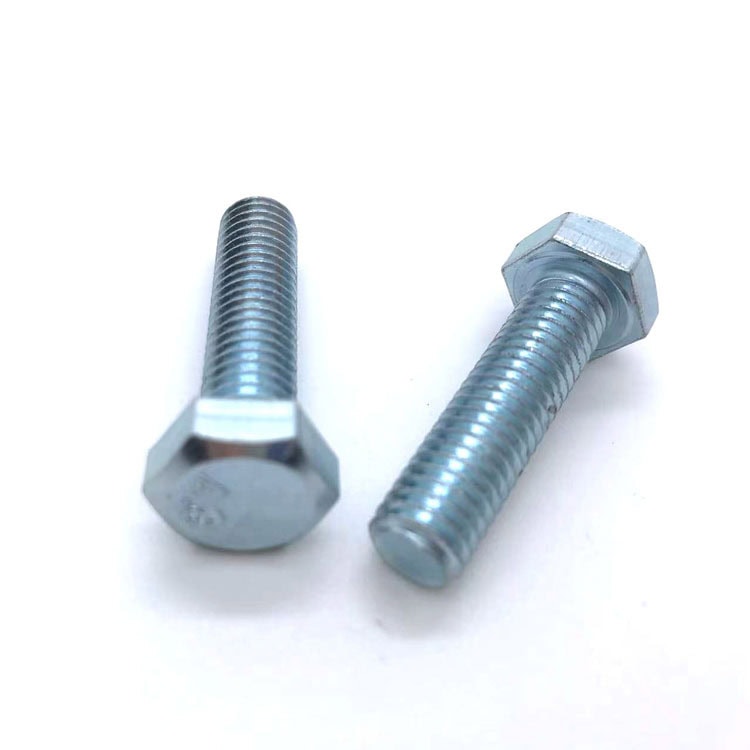
SAE Grade 5 vs. Grade 8 Hex Bolts: Which Is Best for Your Project?
A single fastener failure in a critical assembly can halt production lines, compromise structural integrity, or trigger catastrophic equipment breakdowns. Procurement managers and design engineers face this decision daily: should they specify SAE Grade 5 or Grade 8 hex bolts? The difference between these two grades extends far beyond cost per unit. Material composition, heat treatment processes, and mechanical performance under load determine whether a fastener will perform reliably or become a liability. This guide provides the technical data required to make informed sourcing decisions based on SAE J429 specifications and real-world application demands across North American industries.
Core Technical Differences Between SAE Grade 5 and Grade 8
SAE J429 establishes the performance requirements for carbon and alloy steel externally threaded fasteners. Grade 5 and Grade 8 bolts differ fundamentally in material chemistry, thermal processing, and resulting mechanical properties.
Material Composition and Manufacturing
SAE Grade 5: Manufactured from medium carbon steel, typically containing 0.28–0.55% carbon. The material undergoes quenching and tempering to achieve the specified hardness range of HRC 25–34. This heat treatment provides a balance between strength and ductility suitable for general industrial applications.
SAE Grade 8: Produced from medium carbon alloy steel with carbon content typically between 0.28–0.55%, but with the addition of alloying elements such as boron, manganese, or chromium. The quench and temper process results in a higher hardness range of HRC 33–39. This yields superior tensile strength but reduced ductility compared to Grade 5.
Head Marking Identification
Visual identification is standardized per SAE J429:
- Grade 5: Three radial lines spaced 120° apart on the bolt head.
- Grade 8: Six radial lines spaced 60° apart on the bolt head.
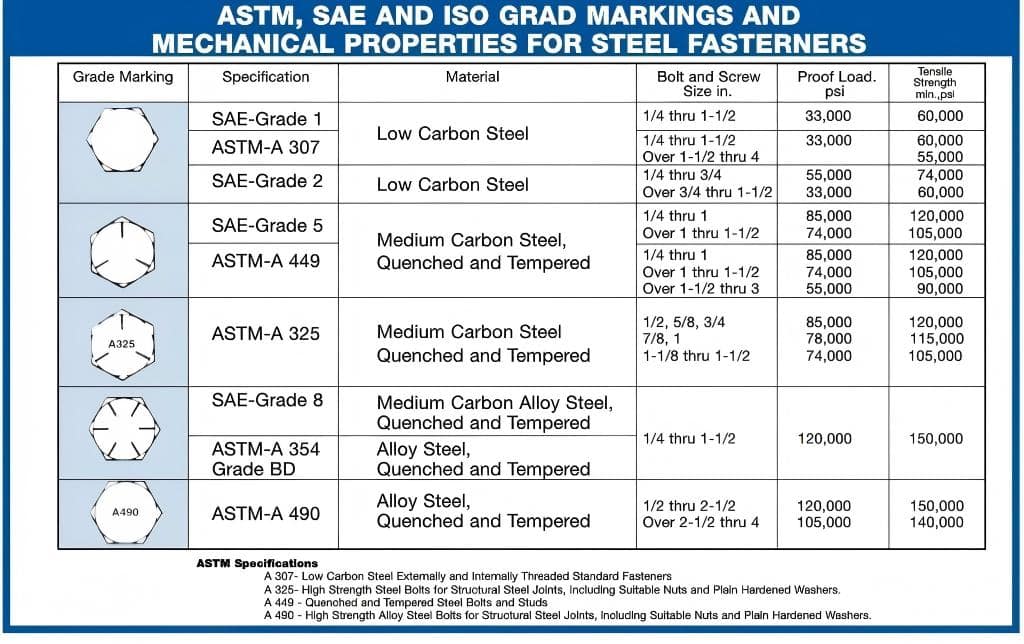
Figure 1: SAE Grade 8 hex bolt head markings showing six radial lines for identification (Source: Lightning Bolt & Supply)
These markings allow field personnel and quality inspectors to verify fastener grade without destructive testing. Counterfeit or mismarked fasteners remain a significant risk in global supply chains, making visual verification a first-line quality control measure.
Mechanical Properties: Detailed Comparison Table
The following table presents the mechanical property requirements per SAE J429 for hex bolts ranging from 1/4″ to 1-1/2″ diameter. All values are minimum specified unless otherwise noted.
| Property | SAE Grade 5 | SAE Grade 8 |
|---|---|---|
| Minimum Tensile Strength | 120,000 psi (827 MPa) | 150,000 psi (1034 MPa) |
| Proof Load (1/4″–1″) | 85,000 psi (586 MPa) | 120,000 psi (827 MPa) |
| Proof Load (>1″–1-1/2″) | 74,000 psi (510 MPa) | 105,000 psi (724 MPa) |
| Minimum Yield Strength | 92,000 psi (634 MPa) | 130,000 psi (896 MPa) |
| Hardness Range | HRC 25–34 | HRC 33–39 |
| Material Type | Medium carbon steel, quenched & tempered | Medium carbon alloy steel, quenched & tempered |
| Head Marking | Three radial lines | Six radial lines |
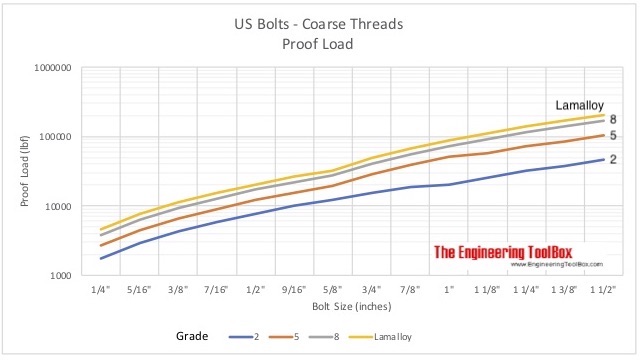
Figure 2: Proof load and tensile strength specifications for U.S. standard bolts (Source: Engineering Toolbox)
Engineering Note: Proof load represents the maximum stress a fastener can withstand without permanent deformation. Grade 8 bolts offer approximately 41% higher proof load than Grade 5 in the 1/4″–1″ diameter range. This difference becomes critical in high-stress joints where preload retention is essential.
Industry Applications in North America
Selection between Grade 5 and Grade 8 depends on load requirements, operating environment, and safety factors mandated by engineering codes or industry standards.
SAE Grade 5 Applications
Grade 5 hex bolts serve as the workhorse fastener across general industrial and commercial construction sectors:
- Structural Steel Framing: Non-critical connections in buildings, mezzanines, and support structures where AISC specifications permit lower-strength fasteners.
- Automotive Chassis Components: Suspension brackets, exhaust systems, and body panel attachments where moderate clamping force suffices.
- Agricultural Equipment: Implement frames, conveyor assemblies, and non-critical drivetrain components.
- HVAC and Mechanical Systems: Ductwork supports, pump housings, and equipment mounting where vibration is minimal.
SAE Grade 8 Applications
Grade 8 fasteners are specified when failure consequences are severe or when joint integrity must be maintained under extreme conditions:
- Heavy Equipment and Mining: Excavator boom assemblies, crusher frames, and haul truck suspension systems operating in Canadian oil sands and U.S. coal regions require maximum clamping force and fatigue resistance.
- Bridge and Infrastructure: High-strength bolting per AASHTO standards for critical connections in steel girder bridges, particularly in seismic zones.
- Pressure Vessel Flanges: ASME Section VIII applications where bolt preload must seal high-pressure joints and resist thermal cycling.
- Performance Automotive and Racing: Connecting rods, cylinder head studs, and driveline components where failure is unacceptable.
- Oil and Gas Wellhead Equipment: Blowout preventer assemblies and wellhead flanges subjected to extreme pressures and corrosive environments.
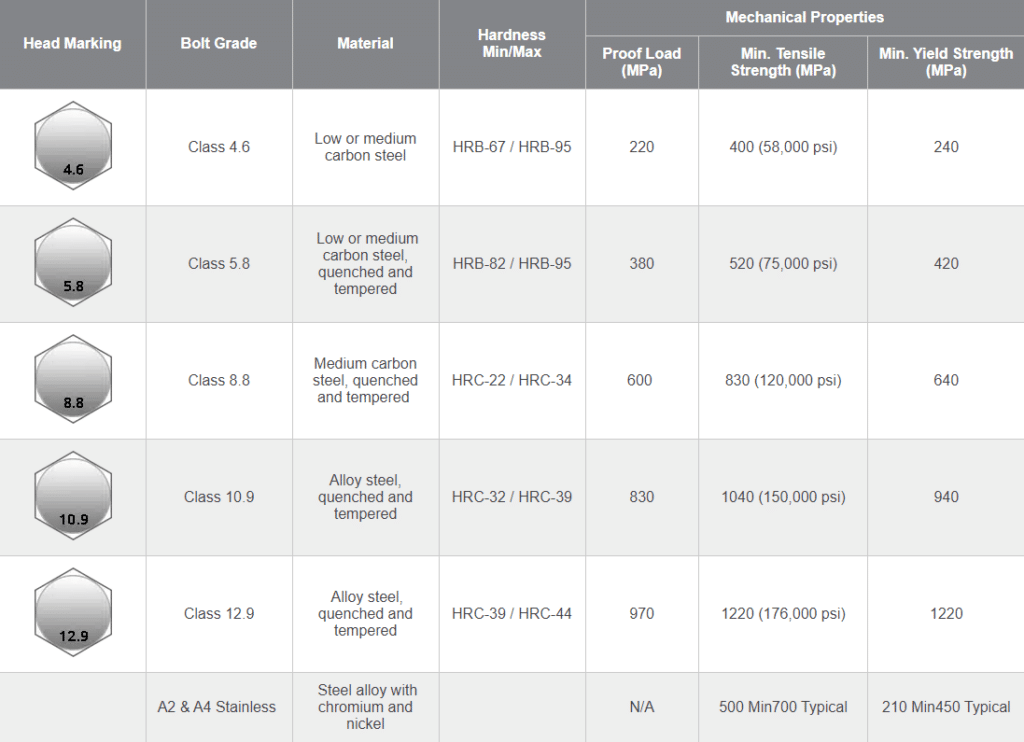
Figure 3: Comparative strength chart showing bolt grade classifications and their mechanical properties (Source: Runsom Precision)
Cold-Weather Performance Considerations
Canadian operations in Alberta, Saskatchewan, and the Northwest Territories face winter temperatures below -40°C. Both Grade 5 and Grade 8 bolts can experience reduced ductility at extreme cold, increasing the risk of brittle fracture. When ambient temperatures drop below -20°C, engineers should:
- Verify that fasteners meet Charpy V-notch impact requirements if specified by the application standard.
- Consider alloy steel grades with nickel content for improved low-temperature toughness.
- Avoid over-torquing, which can initiate stress cracks in cold-embrittled material.
Sourcing and Quality Control: What Buyers Must Verify
Counterfeit and substandard fasteners have caused documented failures in critical infrastructure. Procurement managers must implement verification protocols beyond visual inspection.
Dimensional Conformance
Hex bolts must conform to ASME B18.2.1 for dimensional tolerances. Key parameters include:
- Thread Pitch and Class: Unified Coarse (UNC) threads per ASME B1.1, typically Class 2A external threads.
- Head Dimensions: Across-flats (AF) and head height must meet tolerances to ensure wrench engagement and bearing surface area.
- Thread Gauging: Use GO/NO-GO thread ring gauges to verify pitch diameter and functional thread length.
Material Test Certificates (MTC)
Request MTC per EN 10204 Type 3.1 or equivalent ASTM documentation. The certificate must include:
- Heat number traceability to the steel mill.
- Actual chemical composition analysis (carbon, manganese, sulfur, phosphorus, and alloying elements).
- Mechanical test results: tensile strength, yield strength, elongation, and hardness.
- Heat treatment temperature profile and holding times.
Hardness Testing
Perform Rockwell C hardness testing on a sample from each production lot. Grade 5 must fall within HRC 25–34, and Grade 8 within HRC 33–39. Deviations indicate improper heat treatment or material substitution.
Coating and Corrosion Resistance
Plain finish (black oxide) Grade 8 bolts offer minimal corrosion protection. For outdoor or corrosive environments, specify:
- Zinc Plating: ASTM B633 with chromate conversion coating for moderate protection.
- Hot-Dip Galvanizing: ASTM A153 for maximum atmospheric corrosion resistance, though this may reduce effective thread engagement.
- Mechanical Galvanizing: ASTM B695 for uniform coating thickness without hydrogen embrittlement risk.
Hydrogen Embrittlement Warning: Grade 8 bolts with hardness above HRC 39 are susceptible to hydrogen embrittlement during electroplating. Specify baking per ASTM F1941 within 4 hours of plating to drive off absorbed hydrogen.
Reliable Sourcing for Bulk Orders
Selecting a supplier with demonstrated quality systems and North American market experience reduces procurement risk. When evaluating fastener distributors, prioritize those with:
- ISO 9001:2015 certification with scope covering fastener distribution and quality inspection.
- In-house testing capabilities: hardness testers, thread gauges, and dimensional inspection equipment.
- Transparent supply chain documentation linking products to certified mills.
- Technical support staff capable of assisting with material selection and application-specific recommendations.
For sourcing managers requiring **high-strength hex bolts in bulk quantities**, working with established international trading companies that maintain quality partnerships with certified manufacturers ensures consistent product conformance. QISHENG (Jiangyin Qi Sheng International Trading Co., Ltd.) specializes in supplying SAE J429-compliant fasteners to North American distributors and OEMs, with full traceability and MTC documentation for every shipment.
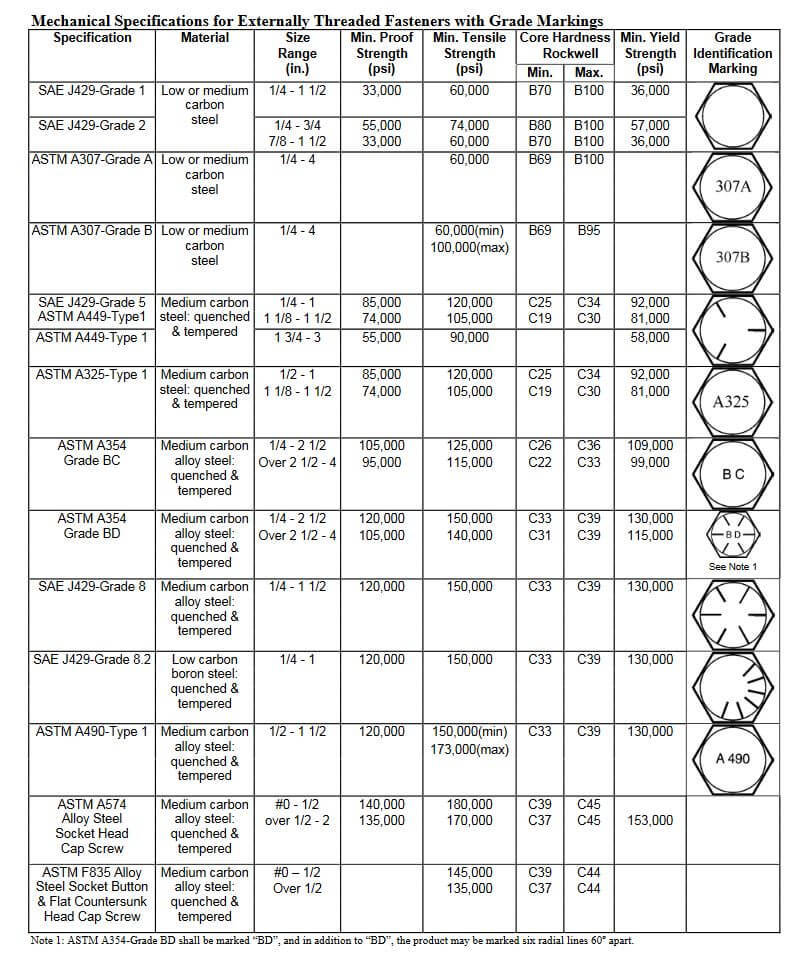
Figure 4: Tensile strength performance data for SAE Grade 8 bolts under load testing (Source: Lightning Bolt & Supply)
Engineering teams evaluating fastener specifications for critical assemblies or seeking technical guidance on grade selection should **contact our fastener experts** for application-specific recommendations. Whether your project demands the cost-effectiveness of Grade 5 or the superior strength of Grade 8, proper material selection and supplier qualification remain non-negotiable elements of procurement best practices.
Final Recommendation: SAE Grade 5 hex bolts provide adequate performance for general industrial applications where cost optimization is a priority and joint loads remain within moderate ranges. SAE Grade 8 fasteners become necessary when safety factors, fatigue resistance, or extreme operating conditions demand maximum clamping force and tensile capacity. Both grades must be sourced from suppliers who provide verifiable material certifications, dimensional conformance, and proper heat treatment documentation. The decision should always be guided by engineering analysis, applicable codes, and long-term reliability requirements rather than initial unit cost alone.