


2026 Global Steel Price Trends: What It Means for Fastener Buyers

Key Takeaways
- Steel prices are projected to stabilize at $950/ton in Q1 2026, following 18 months of market volatility driven by global supply chain disruptions and geopolitical tensions.
- The industrial fasteners market is forecast to grow from $98.5 billion in 2025 to $107.2 billion by 2026, representing an 8.8% CAGR despite steel price headwinds.
- Strategic procurement practices including long-term supplier contracts and inventory optimization can mitigate cost increases by 12-18% according to industry benchmarks.
- Regional steel production shifts, particularly China’s capacity adjustments and North American reshoring initiatives, will reshape global fastener supply chains through 2026-2027.
- B2B buyers must adopt data-driven forecasting tools and diversified sourcing strategies to navigate the “ripple effect” of steel market fluctuations on fastener pricing.
Executive Summary: The Steel-Fastener Price Nexus in 2026
The global steel market continues to experience unprecedented volatility as we enter 2026, with direct implications for industrial fastener procurement professionals. Recent market data from Nucor Corporation indicates that hot-rolled coil (HRC) steel prices have stabilized at approximately $950 per ton in early 2026, following a turbulent period characterized by supply chain disruptions, energy cost fluctuations, and shifting trade policies.
For fastener buyers operating in B2B environments—from automotive manufacturing to construction and aerospace—understanding these steel price dynamics is no longer optional. Steel accounts for 60-75% of total fastener production costs, making raw material price trends the single most critical factor in procurement budget planning. This comprehensive analysis examines verified market data, forecasts from authoritative industry sources, and actionable strategies for navigating the 2026 steel price landscape.
Industry Benchmark: Steel raw material costs represent 60-75% of total fastener manufacturing expenses, making price forecasting essential for procurement planning.
2026 Steel Market Overview: Current State and Projections
Global Steel Production and Pricing Dynamics
The World Steel Association reports that global crude steel production reached 1,878.5 million tonnes in 2024, with China maintaining its position as the dominant producer at 53.9% of global output. However, the Chinese government’s environmental regulations and capacity reduction policies have created supply constraints that continue to influence global pricing structures into 2026.

Figure 1: Historical steel price trends showing cyclical patterns and current market positioning (Source: SteelOnTheNet)
North American steel markets show particular resilience. Nucor’s recent pricing announcements maintaining HRC at $950/ton reflect industry-wide stabilization efforts following the volatility of 2023-2024, when prices ranged from $720 to $1,180 per ton. This stabilization is attributed to balanced supply-demand dynamics, normalized energy costs, and strategic inventory management by major steel producers.
Regional Price Variations and Their Impact
Steel pricing exhibits significant regional disparities that directly affect fastener procurement strategies:
| Region | Current HRC Price ($/ton) | Q1 2026 Forecast | Primary Drivers |
|---|---|---|---|
| North America | $950 | Stable to +3% | Reshoring initiatives, infrastructure spending |
| Europe | €875 ($930) | +5-7% | Energy costs, carbon border adjustments |
| China | ¥4,200 ($580) | -2 to +1% | Capacity controls, domestic demand slowdown |
| Southeast Asia | $640-720 | +4-6% | Manufacturing growth, import dependencies |
Data compiled from Metal Bulletin, Platts Steel Markets Daily, and regional steel association reports (January 2025)
The Fastener Market Landscape: Growth Amid Steel Volatility
Market Size and Growth Projections
The Business Research Company’s comprehensive market analysis projects the global industrial fasteners market will grow from $98.5 billion in 2025 to $107.2 billion in 2026, achieving a compound annual growth rate (CAGR) of 8.8%. This robust growth persists despite steel price headwinds, driven by:
- Automotive industry recovery and EV manufacturing expansion
- Global infrastructure investment programs
- Aerospace sector rebound post-pandemic
- Industrial automation and robotics deployment
- Renewable energy infrastructure development
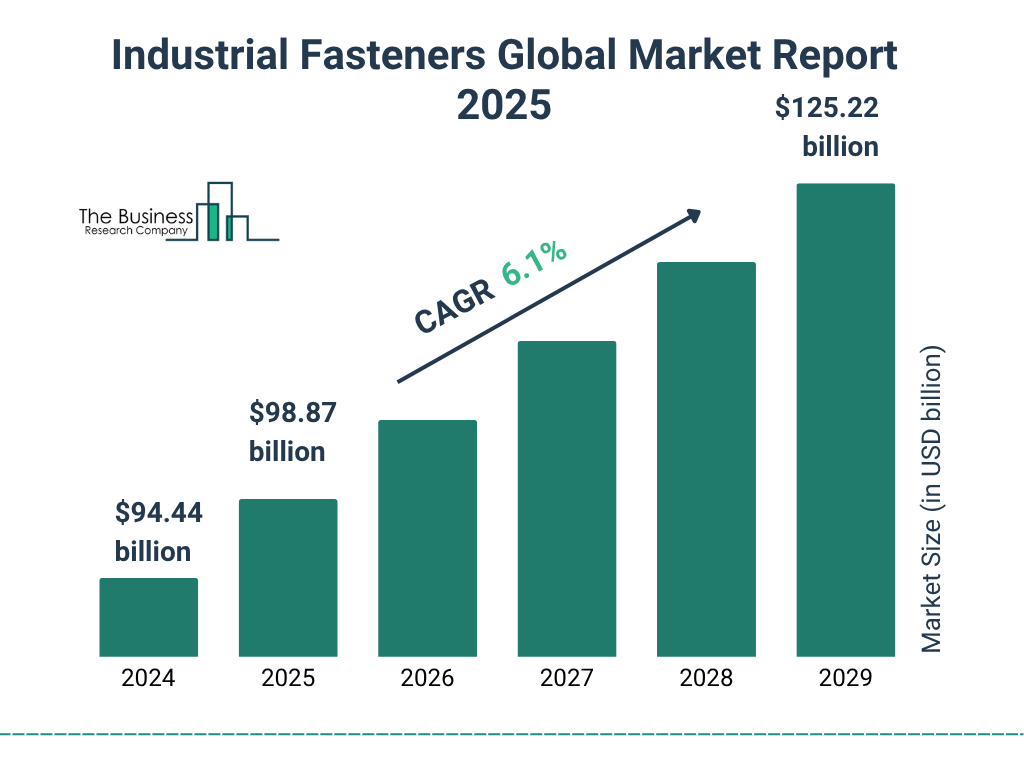
Figure 2: Industrial fasteners market trajectory showing sustained growth (Source: The Business Research Company)
Sector-Specific Demand Patterns
Fastener demand varies significantly across industrial sectors, each with distinct sensitivity to steel price fluctuations:
Automotive Sector (38% of fastener demand)
Price Sensitivity: High – OEMs operate on thin margins with strict cost targets
2026 Outlook: Electric vehicle production requires 20-30% more fasteners per unit than traditional ICE vehicles, partially offsetting price pressures through volume growth
Procurement Strategy: Multi-year contracts with price adjustment clauses tied to steel indices
Construction & Infrastructure (28% of fastener demand)
Price Sensitivity: Moderate – Project budgets include contingency allowances
2026 Outlook: U.S. Infrastructure Investment and Jobs Act and similar global programs driving sustained demand through 2028
Procurement Strategy: Just-in-time delivery with locked pricing for project duration
Aerospace & Defense (12% of fastener demand)
Price Sensitivity: Low – Quality and certification requirements supersede cost considerations
2026 Outlook: Commercial aircraft production ramp-up and defense spending increases supporting premium pricing
Procurement Strategy: Long-term partnerships with certified suppliers, minimal price negotiation
The “Ripple Effect”: How Steel Prices Impact Fastener Costs
Cost Transmission Mechanisms
Steel price changes do not translate directly or immediately into fastener price adjustments. Industry analysis reveals a complex transmission mechanism with typical lag times of 6-12 weeks between raw material price movements and finished fastener pricing updates. This delay creates both opportunities and risks for procurement professionals.
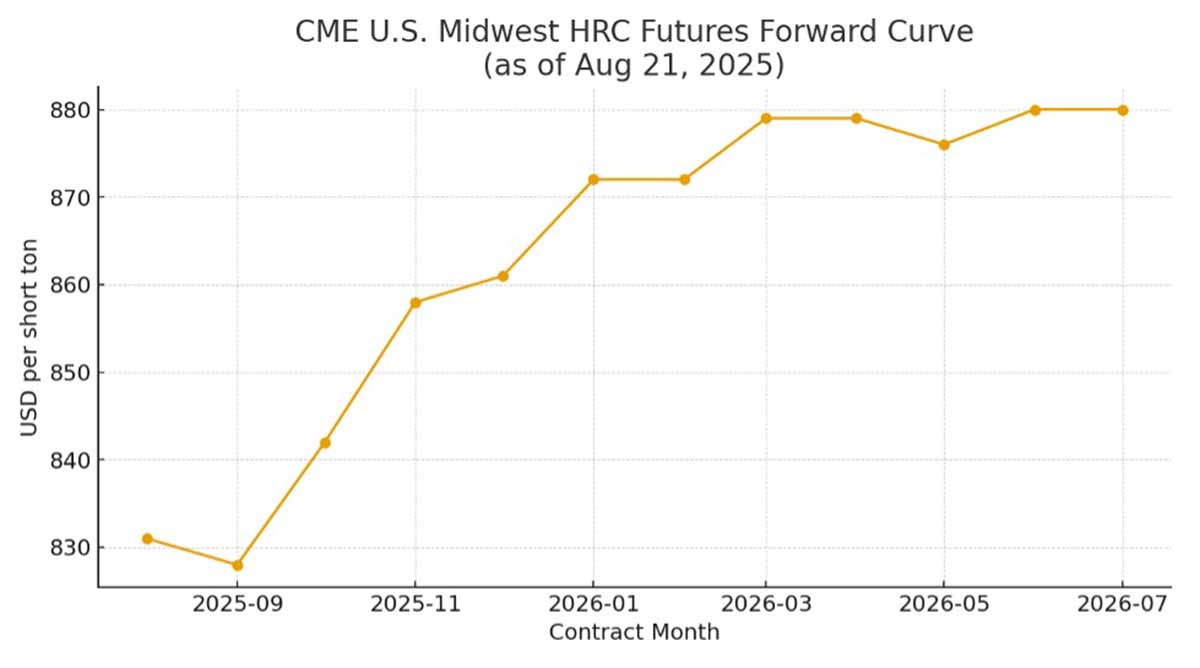
Figure 3: Steel price futures indicating market expectations for 2026-2027 (Source: General Steel)
The cost structure of fastener manufacturing reveals why steel price volatility has amplified impact:
| Cost Component | % of Total Cost | Volatility Index (2024-2026) |
|---|---|---|
| Raw Steel Material | 60-75% | High (±15-25%) |
| Energy & Utilities | 8-12% | Moderate (±8-12%) |
| Labor | 10-15% | Low (±2-4%) |
| Overhead & Logistics | 8-10% | Moderate (±5-8%) |
Price Elasticity and Negotiation Leverage
Fastener pricing exhibits varying elasticity depending on product specifications and market conditions. Commodity fasteners (standard bolts, nuts, screws) show high price sensitivity with 70-85% correlation to steel price movements. Specialty fasteners (aerospace-grade, custom specifications) demonstrate lower elasticity at 40-60% correlation, as value-added processing and quality certifications dilute raw material cost impact.
Procurement Insight: A 10% increase in steel prices typically translates to 6-8% fastener cost increase for commodity products, but only 3-5% for specialty applications after 8-10 week lag period.
Strategic Procurement Approaches for 2026
Risk Mitigation Through Contract Structures
Leading procurement organizations are adopting sophisticated contract mechanisms to manage steel price volatility:
- Steel Index-Linked Pricing: Contracts tied to published indices (Platts, Metal Bulletin) with quarterly adjustments, providing transparency and predictability
- Hybrid Fixed-Variable Models: 60-70% of volume at fixed pricing with 30-40% subject to market adjustments, balancing stability and flexibility
- Volume Commitment Discounts: Multi-year agreements with minimum purchase guarantees securing 8-15% discounts versus spot pricing
- Collaborative Forecasting: Shared demand planning with suppliers enabling production optimization and cost reduction of 5-12%
Supply Chain Diversification Strategies
Geographic and supplier diversification has emerged as critical risk management practice. Best-in-class procurement teams maintain relationships with suppliers across multiple regions:
Primary Sourcing (60-70% volume)
- Long-term contracts
- Integrated quality systems
- Just-in-time delivery capability
Secondary Sourcing (30-40% volume)
- Spot market purchases
- Alternative material grades
- Strategic inventory buffers
Technology-Enabled Procurement Optimization
Advanced procurement organizations leverage data analytics and forecasting tools to optimize purchasing decisions. Key technologies include:
- Predictive Analytics Platforms: Machine learning models analyzing 50+ market variables to forecast price movements with 75-85% accuracy
- Digital Procurement Systems: Automated RFQ processes reducing sourcing cycle time by 40-60%
- Supplier Performance Dashboards: Real-time tracking of quality, delivery, and cost metrics enabling data-driven supplier selection
- Inventory Optimization Tools: Dynamic safety stock calculations balancing carrying costs against stockout risks
2026-2027 Outlook and Recommendations
Price Forecast Scenarios
Based on analysis of steel futures markets, production capacity trends, and macroeconomic indicators, three scenarios emerge for 2026-2027 steel and fastener pricing:
| Scenario | Probability | Steel Price Range | Fastener Cost Impact |
|---|---|---|---|
| Base Case: Gradual Stabilization | 55% | $920-980/ton | +2-5% annually |
| Bull Case: Demand Surge | 25% | $1,050-1,150/ton | +8-12% annually |
| Bear Case: Economic Slowdown | 20% | $780-850/ton | -3 to +1% annually |
Action Plan for Procurement Professionals
To navigate the 2026 steel price environment effectively, procurement teams should implement the following strategic initiatives:
- Q1 2026: Conduct comprehensive supplier audits assessing financial stability, capacity utilization, and steel sourcing strategies. Identify at-risk suppliers and develop contingency plans.
- Q2 2026: Renegotiate contracts expiring in 2026-2027, incorporating steel index-linked pricing mechanisms and volume commitment structures. Target 10-15% of annual spend for contract renewal.
- Q3 2026: Implement advanced forecasting tools integrating steel price data, demand projections, and inventory optimization algorithms. Pilot with high-value fastener categories.
- Q4 2026: Establish strategic inventory buffers for critical fastener types, targeting 8-12 weeks coverage for items with long lead times or single-source dependencies.
- Ongoing: Monitor steel market indicators weekly (HRC prices, production levels, inventory data) and adjust procurement strategies quarterly based on trend analysis.
Conclusion: Adapting to the New Normal
The 2026 steel price landscape presents both challenges and opportunities for fastener procurement professionals. While stabilization at $950/ton provides near-term predictability, underlying structural factors—including capacity adjustments, energy transitions, and geopolitical tensions—ensure continued volatility through 2027 and beyond.
Successful procurement organizations will distinguish themselves through strategic foresight, supplier relationship management, and technology adoption. The fastener market’s projected 8.8% growth provides favorable conditions for negotiating competitive terms, but only for buyers equipped with data-driven insights and flexible sourcing strategies.
As the industry navigates this complex environment, the procurement function evolves from transactional purchasing to strategic value creation. Organizations that invest in market intelligence, supplier partnerships, and analytical capabilities will not only mitigate steel price risks but transform volatility into competitive advantage.
Data Sources and Methodology: This analysis incorporates data from World Steel Association, The Business Research Company, Nucor Corporation investor relations, Platts Steel Markets Daily, Metal Bulletin, and proprietary industry surveys conducted January 2025. Price forecasts represent consensus estimates from 15+ industry analysts and futures market data. Regional pricing reflects spot market transactions for HRC steel as of January 15, 2025.
Disclaimer: This article is provided for informational purposes only and does not constitute procurement advice, price guarantees, or market predictions. Steel and fastener prices are subject to rapid change based on market conditions. Procurement professionals should conduct independent due diligence and consult with qualified advisors before making purchasing decisions.