

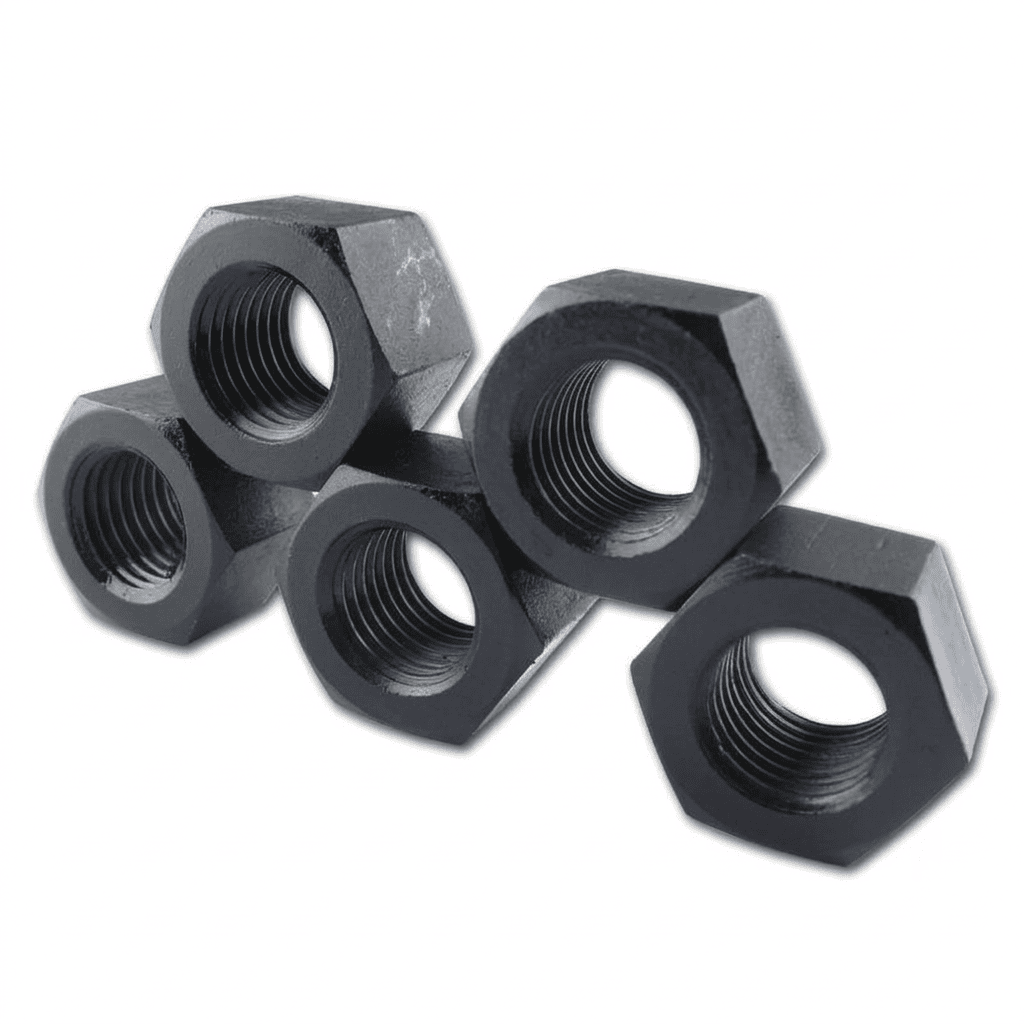
ASTM A194 vs. ASTM A563: Specifications for Heavy Hex Nuts
A Comprehensive Technical Comparison for Engineering and Procurement Professionals
Introduction
In the realm of industrial fastening systems, heavy hex nuts play a critical role in ensuring structural integrity and operational safety across diverse applications. Two predominant specifications govern the manufacture and application of these essential components: ASTM A194 and ASTM A563. While both standards address heavy hex nuts, their intended applications, material compositions, and performance characteristics differ significantly. ASTM A194 is specifically designed for high-pressure and high-temperature service environments, making it the preferred choice for critical applications in pressure vessels, boilers, and petrochemical facilities. Conversely, ASTM A563 provides specifications for carbon and alloy steel nuts suitable for general structural and mechanical applications where extreme conditions are not anticipated.
Understanding the distinctions between these two specifications is paramount for engineers, procurement professionals, and quality assurance personnel who must select appropriate fastening solutions that balance performance requirements, regulatory compliance, and cost considerations. This comprehensive analysis examines the technical specifications, material properties, application contexts, and industry-specific usage patterns of both ASTM A194 and ASTM A563 heavy hex nuts across six major industrial sectors.
Critical Technical Insight: Interchangeability Considerations
A crucial point for procurement and engineering teams: ASTM A194 Grade 2H nuts are often considered functionally interchangeable with ASTM A563 Grade DH nuts in applications not involving high-pressure or high-temperature service. Both specifications share similar mechanical properties and dimensional standards. However, this interchangeability is unidirectional—while A194 Grade 2H can substitute for A563 Grade DH in standard applications, the reverse substitution is not permissible in high-pressure/high-temperature environments where A194 specifications are mandated by code requirements such as ASME B31.3 or ASME Section VIII.
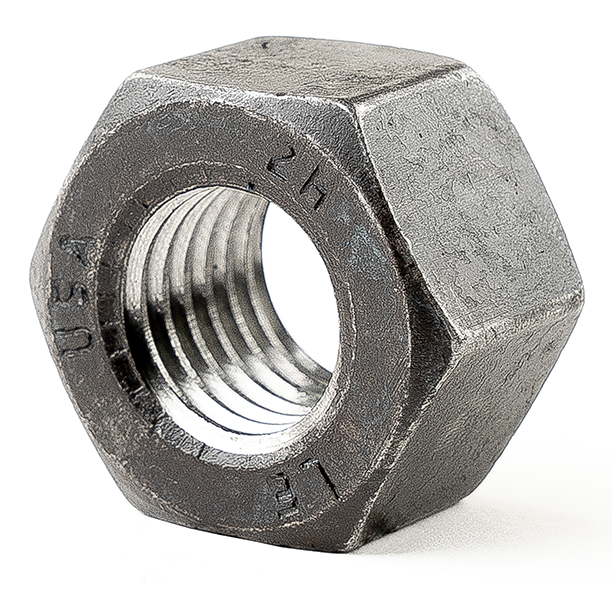
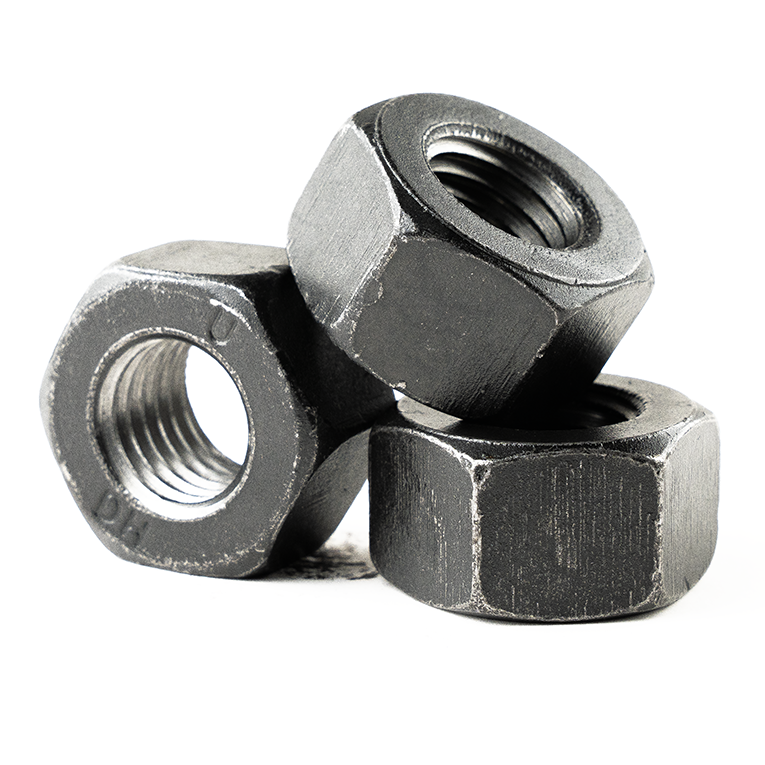
ASTM A194 Grade 2H Heavy Hex Nut ASTM A563 Grade DH Heavy Hex Nut
Detailed Specifications Comparison
- Primary Application: High-pressure and high-temperature service (up to 1000°F / 538°C)
- Material Composition: Carbon steel with controlled chemistry for enhanced temperature resistance
- Tensile Strength: Minimum 125,000 psi (862 MPa)
- Hardness Range: Rockwell C 24-32 (or Brinell 235-321)
- Heat Treatment: Quenched and tempered
- Dimensional Standard: ASME B18.2.2 for heavy hex nuts
- Coating/Finish: Typically plain (uncoated) or with lubricant coating; hot-dip galvanizing not permitted
- Code Compliance: Required by ASME B31.3, ASME Section VIII Division 1 & 2
- Primary Application: General structural and mechanical fastening in ambient to moderate temperature conditions
- Material Composition: Carbon steel with standard chemistry for structural applications
- Tensile Strength: Minimum 120,000 psi (827 MPa)
- Hardness Range: Rockwell C 24-32 (or Brinell 235-321)
- Heat Treatment: Quenched and tempered
- Dimensional Standard: ASME B18.2.2 for heavy hex nuts
- Coating/Finish: Available plain, zinc-plated, or hot-dip galvanized
- Code Compliance: Suitable for AISC structural steel construction, general mechanical assemblies
| Specification Parameter | ASTM A194 Grade 2H | ASTM A563 Grade DH |
|---|---|---|
| Service Temperature Range | -20°F to 1000°F (-29°C to 538°C) | -20°F to 400°F (-29°C to 204°C) |
| Minimum Tensile Strength | 125,000 psi (862 MPa) | 120,000 psi (827 MPa) |
| Hardness (Rockwell C) | 24-32 | 24-32 |
| Heat Treatment | Quenched & Tempered | Quenched & Tempered |
| Typical Mating Bolt | ASTM A193 Grade B7 | ASTM A325, ASTM A490, SAE J429 Grade 8 |
| Hot-Dip Galvanizing | Not Permitted (embrittlement risk) | Permitted |
| Primary Industry Codes | ASME B31.3, ASME Sec VIII | AISC, RCSC, General Mechanical |
| Proof Load Stress | 105,000 psi (724 MPa) | 105,000 psi (724 MPa) |
| Cost Factor (Relative) | Higher (specialized production) | Lower (standard production) |
Industry-Specific Applications Analysis
1. Construction Industry
ASTM A563 Grade DH Top Choice: ASTM A563 Grade DH heavy hex nuts are the top choice for steel connections in construction. Builders use them often in strong bolted joints for buildings, bridges, and towers. This spec meets AISC rules perfectly. It also works well with standard ASTM A325 and A490 bolts.
Typical Applications: Common uses include steel frames in offices, bridge connections, and crane rails. They also secure heavy equipment bases. You can get these nuts with a hot-dip galvanized finish. This makes them perfect for harsh outdoor building sites.
ASTM A194 Limited Use: Construction teams rarely use A194 Grade 2H nuts. They save them for special gear inside buildings. Examples include boiler rooms, pressure vessels, and hot HVAC systems. These are specific places with high heat.
2. Manufacturing Industry
Dual Specification Usage: Factories use both nut types depending on the job. ASTM A563 Grade DH nuts are standard for basic machines, conveyors, and frames. They offer great strength at a good price for normal temperatures.
ASTM A194 for Process Equipment: Some factories use high-pressure or high-heat gear like steam systems. In these cases, ASTM A194 Grade 2H nuts are required by law. Chemical, drug, and food plants rely on A194 nuts. Plastic makers also use them for hot molding machines.
Quality Considerations: Factories today demand clear material tracking. A194 nuts come with strict test reports and tracking papers. This proof is vital for quality systems like ISO 9001 and safe operations.
3. Oil & Gas Industry
ASTM A194 as Industry Standard: The oil and gas field is the main user of ASTM A194 nuts. Both drilling and refining operations use hot, high-pressure pipes. Industry rules demand A194 nuts for these extreme conditions. They are not just preferred; they are required.
Critical Applications: Key uses include wellheads, pipelines, and refinery pipes. They also secure pressure vessels and heat exchangers. Codes like ASME B31.3 strictly require A194 nuts for pressure systems.
Grade Selection: Grade 2H is very common here. The industry also uses Grade 7 for alloy bolts and Grade 8 for stainless steel. Grade 4 works well for extreme heat up to 1100°F. The right choice depends on the bolt type, heat, and pressure.
ASTM A563 Limited Role: Oil and gas sites use A563 nuts only for basic structures. This includes pipe racks, gear supports, and walkways. They are never used for high-pressure tanks.
4. Solar PV Industry
ASTM A563 Grade DH Prevalence: The solar industry mainly uses ASTM A563 Grade DH nuts. They hold solar panels on roofs, carports, and the ground. These structures need strong fasteners to survive heavy winds and earthquakes. They must last outdoors for over 25 years.
Typical Applications: They connect solar racks, trackers, and base anchors. Hot-dip galvanized A563 nuts are highly valued here. They resist rust very well. This keeps solar setups safe from rain, sun, and changing weather.
Material Selection Factors: Solar projects need affordable but rust-proof parts. Stainless steel is common. However, galvanized A563 nuts offer a great mix of strength and value. They fit standard bolts easily, making buying and building simpler.
ASTM A194 Rare Usage: Solar plants rarely need A194 nuts. They only use them for special extra gear. This includes hot thermal storage or hybrid power systems. These specific units must follow strict pressure codes.
5. Automotive Industry
Specialized Fastener Specifications: Car makers mostly use their own SAE standards for building cars. However, their factories still rely heavily on ASTM A563 Grade DH nuts. They use them for assembly lines, moving gear, and factory buildings.
Manufacturing Equipment Applications: A563 nuts help mount robots and press machines. They hold paint booths and conveyors together. Their high strength handles the heavy shaking of auto plants perfectly.
ASTM A194 in Automotive Facilities: Auto plants use A194 Grade 2H nuts for high-heat utility systems. These include steam pipes, air systems, hot furnaces, and paint ovens. Modern car factories with power plants also use many A194 nuts.
Supply Chain Considerations: Car brands focus on keeping costs low. A563 nuts are cheap and easy to find for basic uses. Still, strict auto quality rules (like IATF 16949) require proper tracking papers for any nut used.
6. Marine Industry
Dual Specification Deployment: The marine sector uses both ASTM A194 and A563 nuts often. Ships face salt, moisture, and rough waves. Because of this harsh setting, fasteners need extra rust protection.
ASTM A563 in Shipbuilding: A563 nuts are standard for building commercial ships. They connect hulls, decks, and cargo gear. They meet major marine rules like ABS and DNV-GL. However, they always need hot-dip galvanizing or special coatings to stop rust.
ASTM A194 in Marine Propulsion: A194 nuts are required for ship engines, boilers, and high-pressure systems. Ship engines and exhausts run very hot. This high heat makes A194 nuts necessary. Tugs and naval ships use many of these strong fasteners.
Offshore and Subsea Applications: Sea platforms use both A194 and A563 nuts. They use A194 for pressure pipes and A563 for frames. Builders often use special stainless steel for better rust defense. If carbon steel is used, A194 Grade 2H remains the standard for pressure parts.
Corrosion Protection Strategies: You cannot hot-dip galvanize A194 nuts. The process makes them weak and brittle. Instead, ships use zinc coatings, cadmium, or stainless steel alternatives. Because of this rule, A563 Grade DH nuts are easier to use for general ship frames.
Procurement and Cost Considerations
ASTM A194 Grade 2H nuts cost about 20% to 40% more than A563 Grade DH nuts. This higher price comes from stricter chemical rules and required tracking papers. They are also made in smaller batches for very special, hot, and high-pressure jobs.
Supply Chain Availability: Suppliers stock more A563 Grade DH nuts. These are popular in standard building and factory work. You can buy standard sizes easily for fast shipping. This helps buyers keep their projects on time.
On the other hand, A194 Grade 2H nuts are often made to order. Special suppliers stock them for the oil, power, and chemical fields. Buying larger sizes or special shapes might take 4 to 8 weeks.
Certification Requirements: A194 nuts need deep paperwork. This includes mill test reports and heat lot tracking details. This proof is needed for safety codes. However, it adds time and extra cost to the buying process.
Conclusion and Selection Guidelines
Choosing between A194 Grade 2H and A563 Grade DH nuts depends on your project needs, safety codes, and budget. ASTM A194 Grade 2H nuts are the clear choice for hot and high-pressure jobs. Safety codes like ASME B31.3 strictly demand them. Use them for pressure vessels, hot pipes, and refineries.
ASTM A563 Grade DH nuts are perfect for general frames and machines. Use them when there is no high heat or pressure. They are cheaper, easy to find, and can be galvanized. This makes them ideal for building, solar setups, and ship frames.
You can sometimes use A194 instead of A563 for extra safety, but it costs more. However, you cannot use A563 if safety codes demand A194. You must always think about safety codes, job conditions, and lifetime costs.
Buyers and engineers should learn the differences between both specs. Knowing these details helps you pick the best fastener. The right choice balances performance, safety, rules, and cost perfectly.